Disability Informed Reading Guides
Disability Informed Reading Guides
Image Description: “Disability Informed Reading Guides” pale yellow and blue background with black text. Simple black book with white pages graphic.

Disability Rights as Human Rights: The Role of the Convention on the Rights of Persons with Disabilities (CRPD)
Through reading selections of the United Nations Convention on the Rights of Persons with Disabilities (CRPD), students will explore the role of international agreements in shaping national policies. They will engage with key human rights vocabulary, analyze how the CRPD has influenced disability rights worldwide, and explore issues pertaining to US non-ratification. This lesson encourages critical thinking about disability as a civic and human rights issue, emphasizing the responsibilities of governments in upholding equality and justice. Differentiation strategies for middle vs high school students would include using the original vs easy-read version of the text, as well as differentiated discussion questions.
Image Description: Left, United Nations emblem consisting of a world map surrounded by two olive branches, all in white on a blue background. Right, CRPD logo, each letter on its own in white on a maroon square arranged in a 2×2 grid. To the right are the words “Convention on the Rights of Persons with Disabilities” in maroon.

Easterseals Short Films Lesson Plan
Students will review the social model of disability and then apply it to 4 short films created for the Easterseals Disability Film Challenge. “The Easterseals Disability Film Challenge gives filmmakers—with and without disabilities—the opportunity to collaborate to tell unique stories that showcase disability in its many forms (disabilityfilmchallenge.com).” Students will watch the 4 winning films, and then break into groups to focus on analyzing one film as a group.

Emerging America - The Long Struggle for Disability Rights
Summary:
An introduction helps establish safe and respectful study of disability history. In lesson 1, students the Question Formulation Technique helps develop questions. Then a presentation highlights disabled advocates across American history. In lesson 2, students research the causes, goals and methods, successes and setbacks of the Disability Rights Movement. Students present research with multiple media options: talk with slides, podcast, video, essay, or poster. Lesson 4 guides a genuinely inclusive civic engagement project.
Image Description: Emerging America logo above text that reads “Grades 9-12: The Long Struggle for Disability Rights” above a black and white photo of ADAPT protesters seated on the ground and in wheelchairs holding signs c. 1980s

Emerging America - Disability in the Progressive Era
Summary:
An introduction to disability helps establish safe and respectful study of a difficult topic. Students examine eugenics policy, including forced sterilization and examine how values change. Primary sources include challenges to eugenics from the 1930s as well as 21st century efforts to come to terms with its impacts. The grades 4-5 lesson 2 on immigration policy can provides primary sources and guiding questions that can provide solid support to expand this unit. Unit resources support optional research projects.
The material is emotionally difficult. It is essential to create a safe space for all, including students who might relate personally to the topic. Particular attention is required to ensure that discussion respects students of varied views. It is vital to clarify that universal norms of democracy today are clear that there is no valid justification for the program of eugenics and that its claims were in no way supported by valid science.
Image Description: Emerging America logo above text that reads “Grades 9-12: Disability in the Progressive Era” above a black and white photo of William H. Taft, Oliver Wendell Holmes, Jr. and others in front of the White House. c.1922
FDR Hiding his Disability Lesson
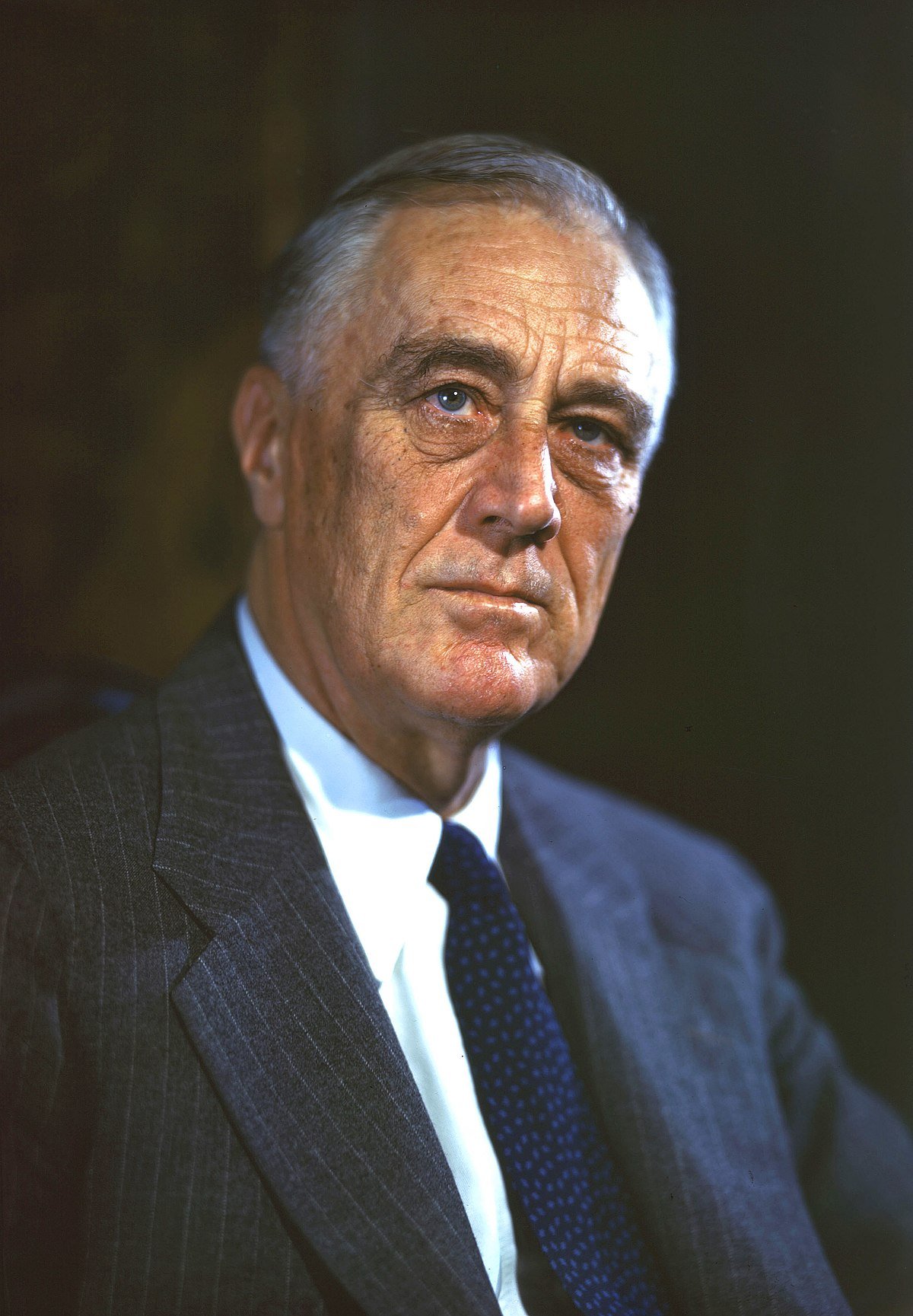
Students will engage in discussion about the Stigma associated with disability. They will then learn about FDR and how illness made him lose the ability to fully walk. They will then learn about how FDR, the people around him, and the press worked to keep his disability as secret as possible. This will lead to a discussion about the impact of his decision to hide his disability, and how taking a prideful approach to his disability could have changed how people perceived him and others with disabilities.
Image description: photograph of Franklin D. Roosevelt

Hephaestus - Greek Mythology
Students will read about Hephaestus. After reading each passage, they will be able to reflect and write about how Hephaestus is portrayed in that specific passage. Using evidence from each passage, the students must justify their opinions.
Image description: Statue of Hephaestus
Hidden Voices: Americans with Disabilities in United States History
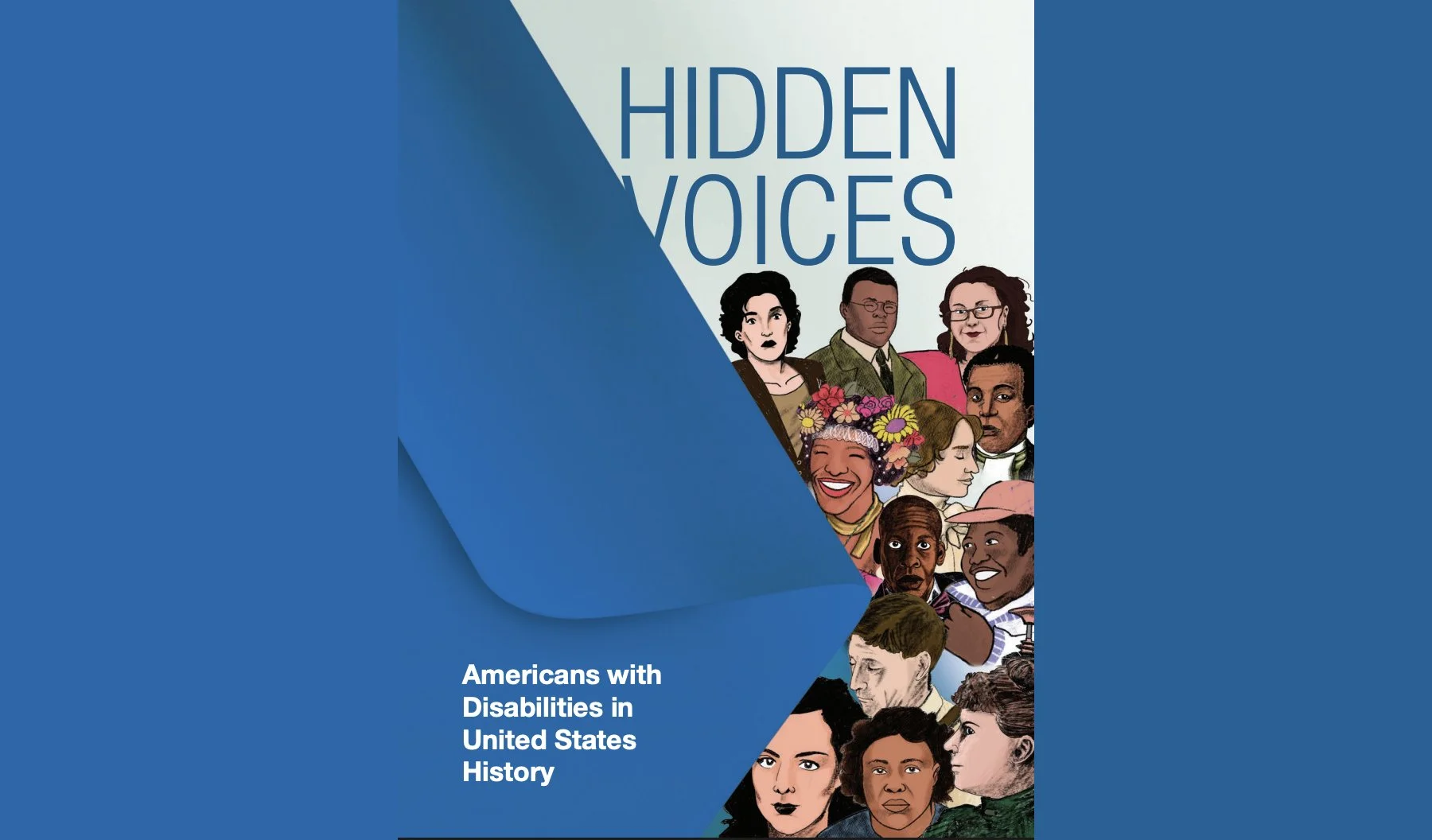
Hidden Voices: Americans with Disabilities in United States History introduces students to the often-overlooked contributions of Americans with disabilities throughout U.S. history. Through 42 biographical profiles, the resource highlights diverse experiences and impacts on social, political, cultural, and economic life. Each profile includes questions, images, curriculum connections, and resources to support analysis, making it adaptable across grades and subjects while fostering understanding and empathy.
Image Description: Text reads “Hidden Voices, Americans with Disabilities in United States History” along with a collage of illustrated portraits of people

History of Eyeglasses: The Importance of Adaptive Equipment
In this lesson, students will learn about science, history and geography related to eyeglasses. First, they will consider the history of eyeglasses, their impact on vision impairments, and how they are so widespread in America (and other high-income countries) that wearing them is rarely considered to indicate a vision issue; in fact, they are often fashion statements. Then they will explore how access to glasses differs around the world, specifically considering barriers that prevent access. Finally, they will choose their own adaptive device (a list of ideas is provided, but students are welcome to choose their own), and create an infographic that explains: the important benefits to widespread usage of their chosen device, current barriers, and suggest possible solutions.
Image Description: “History of Eyeglasses: The Importance of Adaptive Equipment” in black text on a light green box. On all sides is about a dozen black eyeglasses scattered on a white background.
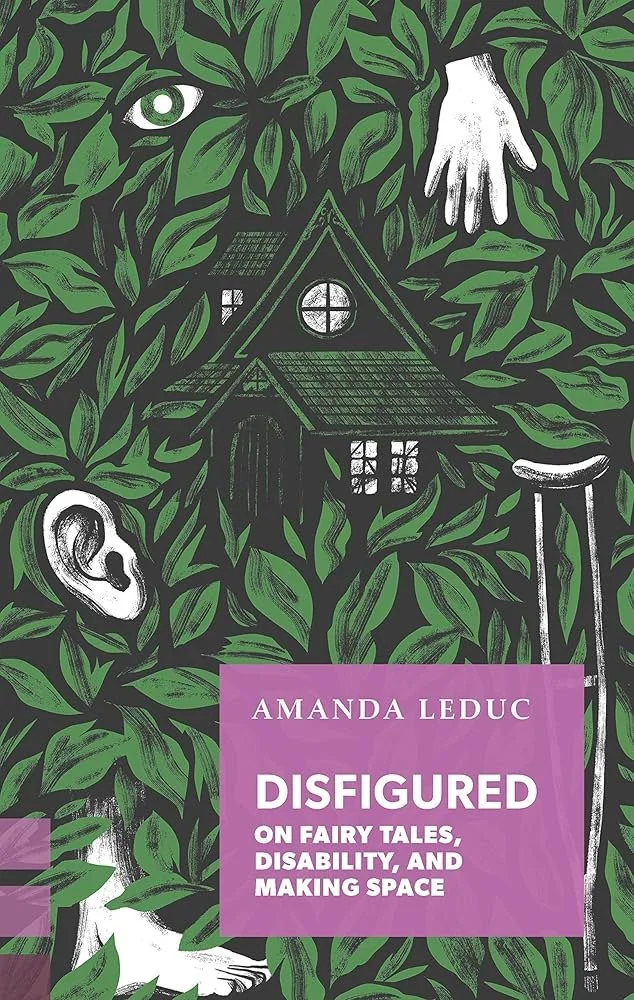
Into the Woods: Exploring Disabilities in Fairy Tales and Classic Stories
Using Amanda Leduc’s book “Disfigured: On Fairy Tales, Disability, and Making Space,” as inspiration students will consider different representations of disability in fairy tales and classic stories. They will watch an interview and a reading with Leduc, read 2 texts referenced in her book and learn to identify issues with how disabled people are presented and stereotyped. Students will produce two written assignments. One is an update to a classic story (either Beauty and the Beast or the Little Mermaid); the students will rewrite the classic tale to center and honor experiences of all bodies and abilities. The second assignment is a choice assignment. Students will either rewrite a second tale, or write a 1 page autobiographical story in the style of a fairy tale.
Image Description: The cover of the book “Disfigured: On Fairy Tales, Disability, and Making Space” by Amanda Leduc
Me Before You: Disability-Informed Reading Guide
Me Before You: Disability Informed Reading Guide
Image Description: “Me Before You Disability Informed Reading Guide” Yellow background with black text. Simple black book with white pages graphic.

The New York Times - ‘26.2 Miles Is Easy. Getting Around New York City Is Not.’ - Lesson Plan
In this lesson, students will learn why it’s easier for one athlete to win a marathon in New York than to navigate the city in a wheelchair. Then, students will evaluate the accessibility of public spaces where they live.
Image Description: "The Learning Network Teaching & Learning with the New York Times" Below the text is a photograph of Daniel Romanchuk in his racing wheelchair crossing a busy street at a crosswalk.

The New York Times - ‘The Hidden Image Descriptions Making the Internet Accessible’
In this lesson, students will learn about alt text, and image descriptions that help people who have low vision or are blind to use the internet. Then, they will practice using the feature.
Image Description: "The Learning Network Teaching & Learning with the New York Times" Below the text is the Mona Lisa with 3 examples of alt text descriptions from Microsoft Word, Facebook and Wikipedia.

New York Times: Learning With: ‘Adaptive Video Game Controllers Open Worlds for Gamers With Disabilities’
This lesson explores how adaptive video game controllers are transforming gaming for players with disabilities. Students will first reflect on their own gaming experiences before analyzing a commercial and reading an article about accessibility in gaming. Through discussion questions, they will examine the challenges faced by disabled gamers, how technology has evolved to be more inclusive, and the broader impact of adaptive controllers. The lesson encourages critical thinking about accessibility in technology and invites students to consider how they would design more inclusive gaming experiences.
Image Description: "The Learning Network Teaching & Learning with the New York Times" Below the text is a photo of Erin Hawley playing video games with her family. She uses an adaptive controller.

Patient No More: People with Disabilities Securing Civil Rights
Teaching the story of the 504 occupation, the focus of the Patient No More exhibit, will undoubtedly leave students with a new perspective toward living with a disability. “Patient No More” offers a story about the creativity and strength that comes out of the disability community, an incredible example of how change can happen from the bottom up. It's also a story about how disability rights have changed the lives of all Americans in ways they might not realize.
Image Description: “Patient No More - People with disabilities securing civil rights” black and white photo of protestors with capitol building in the background, many in wheelchairs, one with a sign on the back of their wheelchair that says “We Shall Overcome”
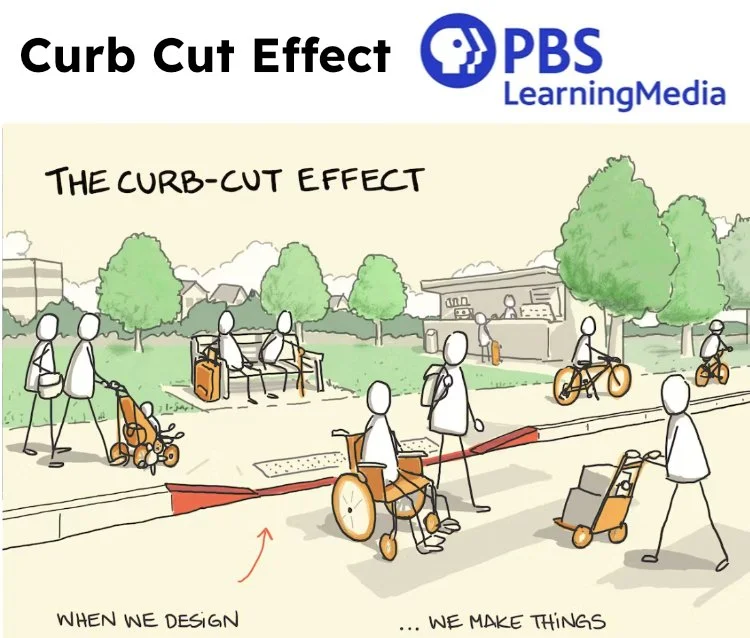
PBS Learning Media - The Americans with Disabilities Act (ADA) and the Curb-Cut Effect | Interactive Lesson
Students explore the history of curb cuts, from early disability rights advocacy in the 1940s through the passage of the Americans with Disabilities Act in 1990, and examine how accessibility features designed for disabled people often benefit far broader communities. Through an interactive lesson and writing prompt, students consider how civic engagement by a specific group can shape policy in ways that serve everyone.
Image Description: “Curb Cut Effect” in black text “PBS Learning Media” in blue text with the PBS logo. Below the text is an illustration using stick figures in a street scene showing a curb cut and a variety of wheelchairs and other wheeled things with the people using them
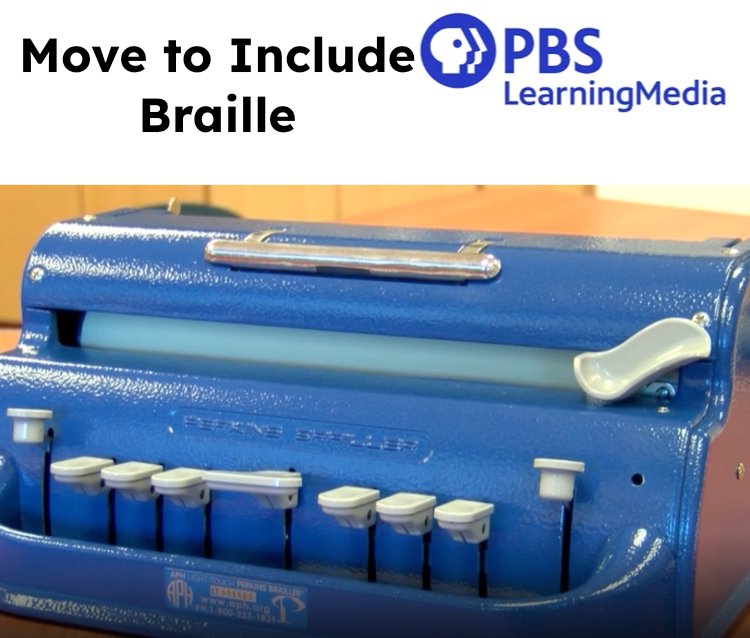
PBS Learning Media - Braille | Move to Include
Students watch a short video introducing Braille as a tactile literacy system and learn how it works as a code of raised dots representing letters and words. Through background reading and discussion questions, students explore how Braille functions as a tool for access and consider how technology has expanded the ways blind, low-vision, and deaf-blind people interact with written language.
Image Description: “Move to Include” in black text “PBS Learning Media” in blue text with the PBS logo. Below the text is a blue brailler.

PBS Learning Media - Renegades Lessons
Summary:
Renegades is a documentary series from American Masters that showcases the lives and cultural contributions of little-known historical figures with disabilities. These lessons were designed to be used with the videos. They can be used individually or as a unit.
Image Description: “Renegades” in black text “PBS Learning Media” in blue text with the PBS logo. below the text are a series of 5 colorful images from each of the 5 short films. Left to right, Brad Lomax, Celestine Tate Harrington, Daniel K. Inouye, Judy-Lynn Del Ray, and Thomas Wiggins

Posters with Disability Inclusive Content
Posters with disability representation. Most are free to download, though some can be purchased as well.
Image description: Corkboard wall with many signs of assorted size and colors.

Racialization of Disability Lesson
In this lesson, students will read and discuss Douglas Baynton’s Disability and the Justification of Inequality in American History. Students will participate in a discussion about the racialization of disability and the intersections of ableism and racism.
Image description: Photograph of James Baldwin and the quote “We can disagree & still love each other unless your disagreement is rooted in my oppression & denail of my humanity & right to exist” - James Baldwin