
Emerging America - Disability, Civic Engagement, and Government
Summary:
This unit works particularly well in a course on civics and government. The intro lesson introduces key information and can be useful to check student knowledge and experiences. Lesson 1 is essential to introduce the unit's study of disability. Lessons 2 & 3 delves into work for disability rights, including transformative legislation. In lesson 4, students apply what they have learned about civic action to research, plan, and carry out their own civic engagement project. (This lesson is also used for Grades 9-12.) Lesson 5 can stand alone or fit within the unit; it adds disability rights as an option for study of historic Supreme Court cases.
Image Description: Emerging America logo above text that reads “Grades 6-8: Disability, Civic Engagement, and Government” above a black and white photo of an ADAPT Protest c. 1990

Emerging America - Disability, Citizenship, and Civil Rights
Lesson Summary:
Lesson 1 is essential to introduce study of disability. Lesson 2 integrates disability into study of immigration. This lesson could also stand alone, or it could support a larger immigration unit. Lessons 3 & 4 work together but could also work separately. All three lessons can be taught in one grade or introduced over multiple grades.
Image Description: Emerging America logo above text that reads “Grades 4-5: Disability, Citizenship, and Civil Rights” above a black and white photo of George Veditz presenting Preservation of the Sign Language in American Sign Language. c. 1913

Emerging America - Disability and Community Leadership Unit
Lesson Summary: In lesson 1, students explore primary sources and their own experiences to become familiar with ideas about disability and ways that students, their community, and their school can support access for everyone. In lesson 2, students identify and agree to ways to make decision-making inclusive. Students discuss characteristics of good leaders using illustrated stories of disability advocates. In lesson 3, students explore a case study of disability advocacy to dig deeper into how civic leaders strengthen their communities.
All three lessons can be taught in one grade or introduced over multiple grades.
Image Description: Emerging America logo at top with text reading “Grades K-3: Disability and Community Leadership” above a black and white photo of Eleanor Roosevelt visiting children at Langford School. c.1930
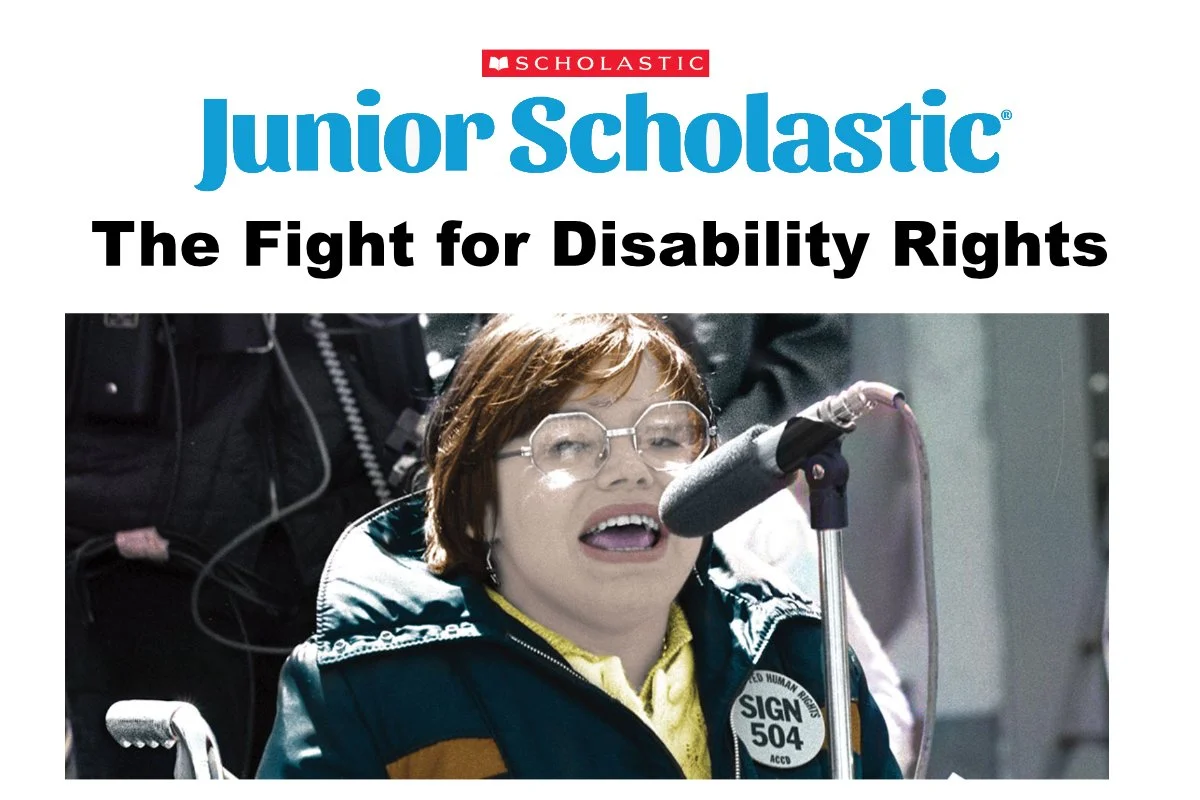
The Fight for Disability Rights Lesson by Junior Scholastic
A lesson plan based on the Scholastic article “The Fight for Disability Rights,” where students learn about the Americans with Disabilities Act.
Image Description: Junior Scholastic logo above text “The Fight for Disability Rights” and a photo of Judy Heumann speaking at a rally in 1977. She is wearing a big round button that says “Sign 504”
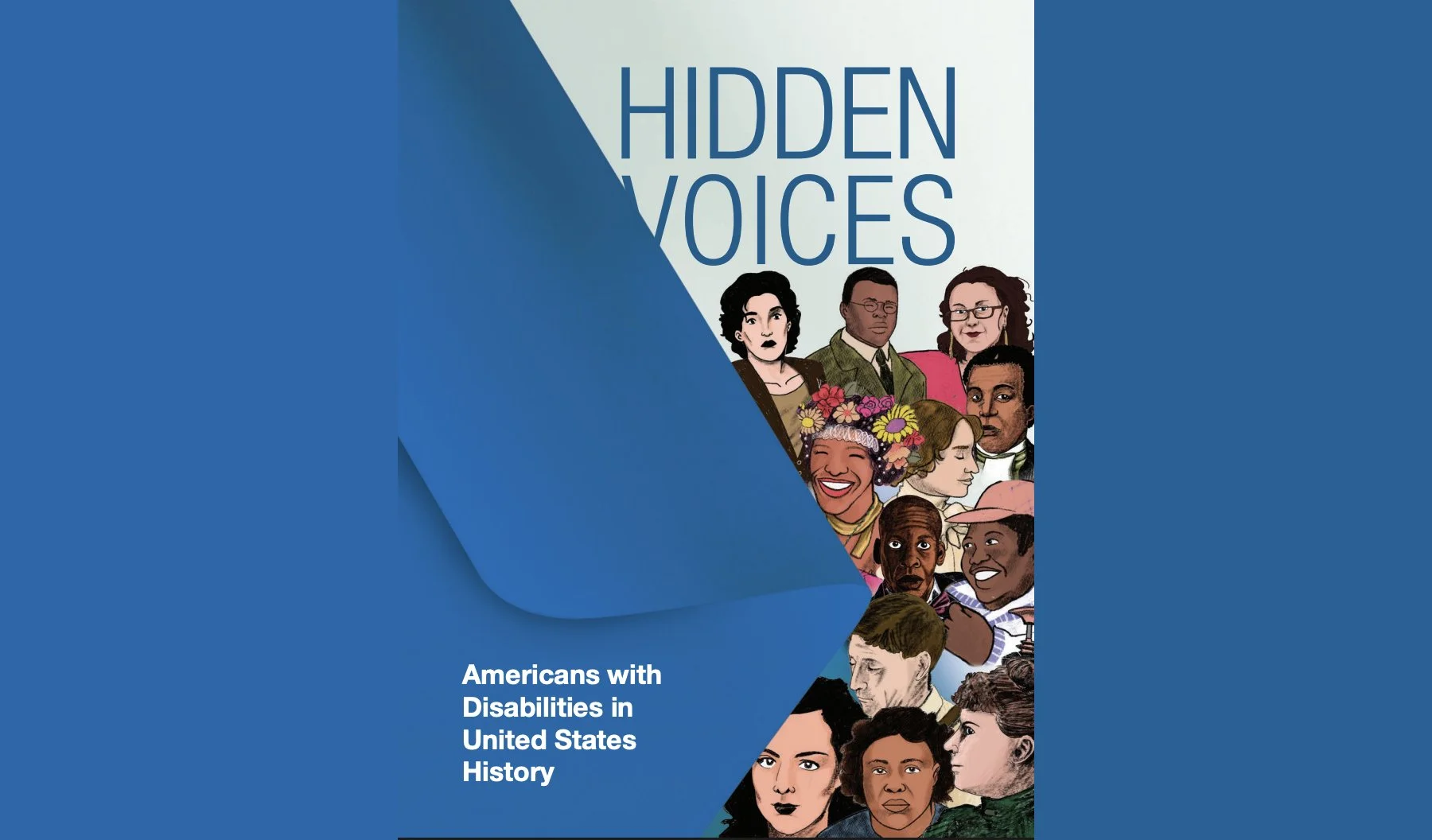
Hidden Voices: Americans with Disabilities in United States History
Hidden Voices: Americans with Disabilities in United States History introduces students to the often-overlooked contributions of Americans with disabilities throughout U.S. history. Through 42 biographical profiles, the resource highlights diverse experiences and impacts on social, political, cultural, and economic life. Each profile includes questions, images, curriculum connections, and resources to support analysis, making it adaptable across grades and subjects while fostering understanding and empathy.
Image Description: Text reads “Hidden Voices, Americans with Disabilities in United States History” along with a collage of illustrated portraits of people
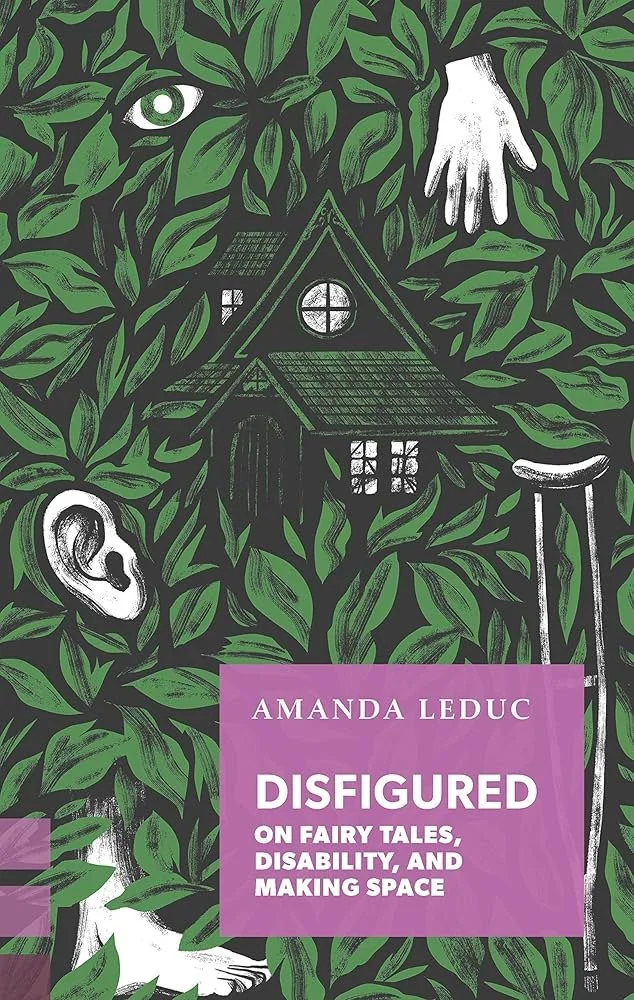
Into the Woods: Exploring Disabilities in Fairy Tales and Classic Stories
Using Amanda Leduc’s book “Disfigured: On Fairy Tales, Disability, and Making Space,” as inspiration students will consider different representations of disability in fairy tales and classic stories. They will watch an interview and a reading with Leduc, read 2 texts referenced in her book and learn to identify issues with how disabled people are presented and stereotyped. Students will produce two written assignments. One is an update to a classic story (either Beauty and the Beast or the Little Mermaid); the students will rewrite the classic tale to center and honor experiences of all bodies and abilities. The second assignment is a choice assignment. Students will either rewrite a second tale, or write a 1 page autobiographical story in the style of a fairy tale.
Image Description: The cover of the book “Disfigured: On Fairy Tales, Disability, and Making Space” by Amanda Leduc

Mechanical Engineering: Wheels and Gears - How One Invention Can Lead to Another featuring Ralph Teetor
This lesson is a STEM lesson followed by a History lesson with an ELA activity. The STEM lesson explores basic concepts of mechanical engineering and physics while showing that the parts, knowledge and skills used to develop old, even ancient machines can be used to create new machines.
The students will learn that machines are made up of smaller parts and that often the same parts are recombined to make sometimes very different machines. These parts operate according to standard scientific principles. The students will explore wheels and gears as they think about the small parts that machines like bicycles and cars have in common. They will think about how the same parts can be combined to invent new machines.
During the next part of the lesson, the students will learn about Ralph Teetor, the blind mechanical engineer, who built on his knowledge of bicycles and used his degrees in Mechanical Engineering to become a successful businessman and automotive engineer. He invented modern cruise control among many other things, often—but not exclusively—leading to improvements in the design of automobiles.
Students will gain a better idea about how inventors use their existing knowledge and education to invent new things. They will learn that sometimes prejudice leads people to be resistant to new ideas, while imagination, work, and education can lead to new opportunities and inventions. When these students are older, when they think about cruise control, they’ll remember that blind people—just like sighted people—can have a variety of talents, skills, and interests.
Image Description: 4 gears in shades of blue on a background of grey gears

More Than A Wheelchair: Accessibility Symbols
Students will consider the icon of the person in a wheelchair, the “International Symbol of Access.” They will learn about its history and the recent Accessibility Icon project that updated it. They will also consider other disability symbols, both in the US and internationally (such as symbols that indicate Deafness, Hidden Disabilities, and Autism, and how they are used/not used in other countries).
Art extensions include photography assignments to document iconography in their school and in everyday life and new symbol-making where students make new symbols that could replace the wheelchair, and be more inclusive.
Geography extension is a study of symbols and use/news about them in other countries. Students will be assigned a country to study either individually or in groups, and explore disability iconography in that place. This activity would work well as a library-based extension as well.
Image Description: a white and blue reserved parking sign with a traditional wheelchair accessible symbol and a clear backed sticker of the new Accessible Icon in red pasted over it.

One Out of Five lesson series
The purpose of this lesson is to humanize the experience of disability by focusing on student-voice videos, recognize diversity within the disability community, and discuss ways to promote accessibility. This is the first in a series of 5 lessons by Washington State’s One Out of Five Disability History and Pride Project.
Image Description: Groups of students sit and stand, talking in clusters. The profiles of the students of different ages, races, and abilities is on a colorful background of yellow, orange, and green. The dominant image is the silhouette of a male student in dark blue reading a book. The title is: One Out of Five: Disability History and Pride Project. “One” and “five” are spelled out in American Sign Language. At the bottom, Braille reads: “pride” and “history.”]

Patient No More: People with Disabilities Securing Civil Rights
Teaching the story of the 504 occupation, the focus of the Patient No More exhibit, will undoubtedly leave students with a new perspective toward living with a disability. “Patient No More” offers a story about the creativity and strength that comes out of the disability community, an incredible example of how change can happen from the bottom up. It's also a story about how disability rights have changed the lives of all Americans in ways they might not realize.
Image Description: “Patient No More - People with disabilities securing civil rights” black and white photo of protestors with capitol building in the background, many in wheelchairs, one with a sign on the back of their wheelchair that says “We Shall Overcome”
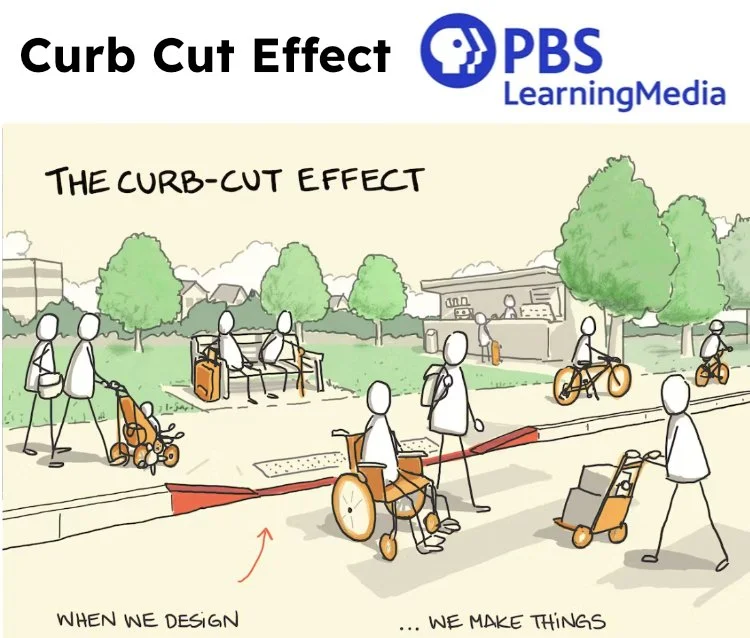
PBS Learning Media - The Americans with Disabilities Act (ADA) and the Curb-Cut Effect | Interactive Lesson
Students explore the history of curb cuts, from early disability rights advocacy in the 1940s through the passage of the Americans with Disabilities Act in 1990, and examine how accessibility features designed for disabled people often benefit far broader communities. Through an interactive lesson and writing prompt, students consider how civic engagement by a specific group can shape policy in ways that serve everyone.
Image Description: “Curb Cut Effect” in black text “PBS Learning Media” in blue text with the PBS logo. Below the text is an illustration using stick figures in a street scene showing a curb cut and a variety of wheelchairs and other wheeled things with the people using them
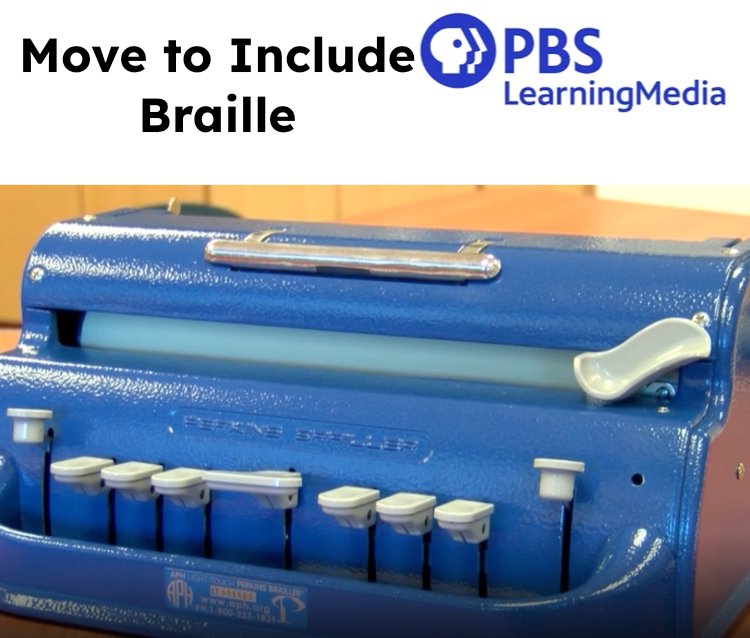
PBS Learning Media - Braille | Move to Include
Students watch a short video introducing Braille as a tactile literacy system and learn how it works as a code of raised dots representing letters and words. Through background reading and discussion questions, students explore how Braille functions as a tool for access and consider how technology has expanded the ways blind, low-vision, and deaf-blind people interact with written language.
Image Description: “Move to Include” in black text “PBS Learning Media” in blue text with the PBS logo. Below the text is a blue brailler.

PBS Learning Media - Renegades Lessons
Summary:
Renegades is a documentary series from American Masters that showcases the lives and cultural contributions of little-known historical figures with disabilities. These lessons were designed to be used with the videos. They can be used individually or as a unit.
Image Description: “Renegades” in black text “PBS Learning Media” in blue text with the PBS logo. below the text are a series of 5 colorful images from each of the 5 short films. Left to right, Brad Lomax, Celestine Tate Harrington, Daniel K. Inouye, Judy-Lynn Del Ray, and Thomas Wiggins
Using Stencils and Touch to Create Visual Art (Based on the Art of Eşref Armağan)
By experimenting with stenciling, one technique Eref Aramagan uses to create his Art, the student will become aware of a way by which visual art can be created by use of touch.
Image Description: Painting of brightly colored butterflies made using stencils by Eref Aramagan

We Want to Go to School
Using the book "We Want to Go to School," students will learn about the segregation of students with disabilities in the school setting. They will learn about the barriers that prevented students from attending school and the progression and processes to challenge and remove those barriers.
Image Description: Cover of We Want to Go to School! The Fight for Disability Rights by Maryann Cocoa-Leffler & Janine Leffler. The cover artwork shows five children behind a table that has papers and a gavel on it.

We Will Ride Lesson by Pop Culture Classroom
In this lesson students will read a 2-page graphic novel format story about the Gang of 19 and “We Will Ride” action, and how they fought for equal rights for the disabled.
Image Description: Graphic Novel cover showing protesters in purple black and off white on a green background with the title “Colorful History Comics #31 We Will Ride” underneath the comic.