
Infinite Motifs - the Art of Yayoi Kusama
In this lesson, students will learn about the paintings of Yayoi Kusama, an artist from Japan who is world-renowned for her immersive rooms and graphic paintings. Kusama lives in a supportive facility for people who live with psychiatric conditions, and has done so since the 1970s; the exact nature of her mental health support needs has not been disclosed to the public, but she has described experiencing hallucinations, anxiety, and pain in interviews. As part of this lesson, students will learn about different housing types for people of all abilities. Students will also be able to create either a painting or an infinity room (assignment can vary depending on your classroom materials).
Image Description: A large pumpkin sculpture sits on the grass, yellow and covered in vertical rows of black polka dots in varying sizes

Mapping the Travels of James Holman - Using a Political Map of the World
NOTE - This lesson works best following a general introduction about using a Political World Map
This lesson introduces students to James Holman, a blind world traveler and travel writer. He became the first blind person recognized for traveling around the world solo in 1832. He wrote extensively about his travels. Students will practice using a World Political Map to locate where he traveled. This exercise also demonstrates one way we can use maps to help us as we study history.
Image Description: “Mapping the Travels of James Holman Using a Political Map of the World” in black on a marigold background. A greyscale world map showing the routes he traveled is below the text.

Mechanical Engineering: Wheels and Gears - How One Invention Can Lead to Another featuring Ralph Teetor
This lesson is a STEM lesson followed by a History lesson with an ELA activity. The STEM lesson explores basic concepts of mechanical engineering and physics while showing that the parts, knowledge and skills used to develop old, even ancient machines can be used to create new machines.
The students will learn that machines are made up of smaller parts and that often the same parts are recombined to make sometimes very different machines. These parts operate according to standard scientific principles. The students will explore wheels and gears as they think about the small parts that machines like bicycles and cars have in common. They will think about how the same parts can be combined to invent new machines.
During the next part of the lesson, the students will learn about Ralph Teetor, the blind mechanical engineer, who built on his knowledge of bicycles and used his degrees in Mechanical Engineering to become a successful businessman and automotive engineer. He invented modern cruise control among many other things, often—but not exclusively—leading to improvements in the design of automobiles.
Students will gain a better idea about how inventors use their existing knowledge and education to invent new things. They will learn that sometimes prejudice leads people to be resistant to new ideas, while imagination, work, and education can lead to new opportunities and inventions. When these students are older, when they think about cruise control, they’ll remember that blind people—just like sighted people—can have a variety of talents, skills, and interests.
Image Description: 4 gears in shades of blue on a background of grey gears
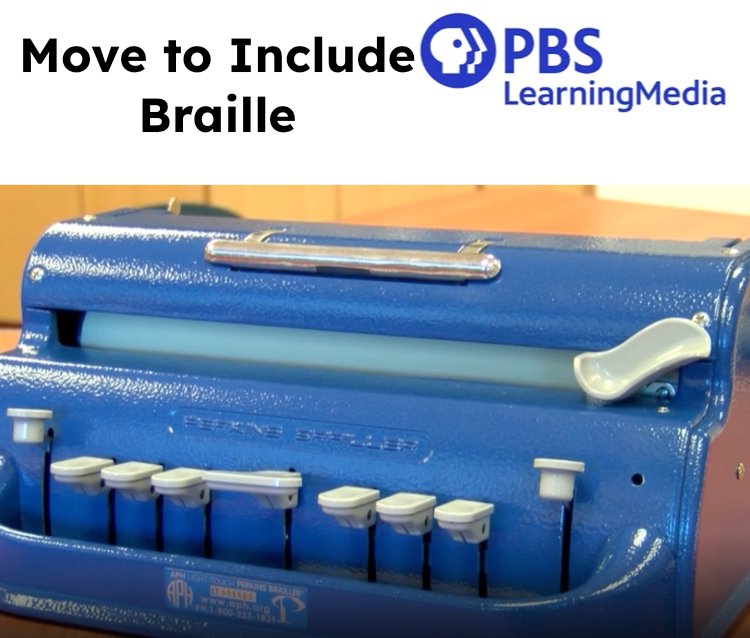
PBS Learning Media - Braille | Move to Include
Students watch a short video introducing Braille as a tactile literacy system and learn how it works as a code of raised dots representing letters and words. Through background reading and discussion questions, students explore how Braille functions as a tool for access and consider how technology has expanded the ways blind, low-vision, and deaf-blind people interact with written language.
Image Description: “Move to Include” in black text “PBS Learning Media” in blue text with the PBS logo. Below the text is a blue brailler.
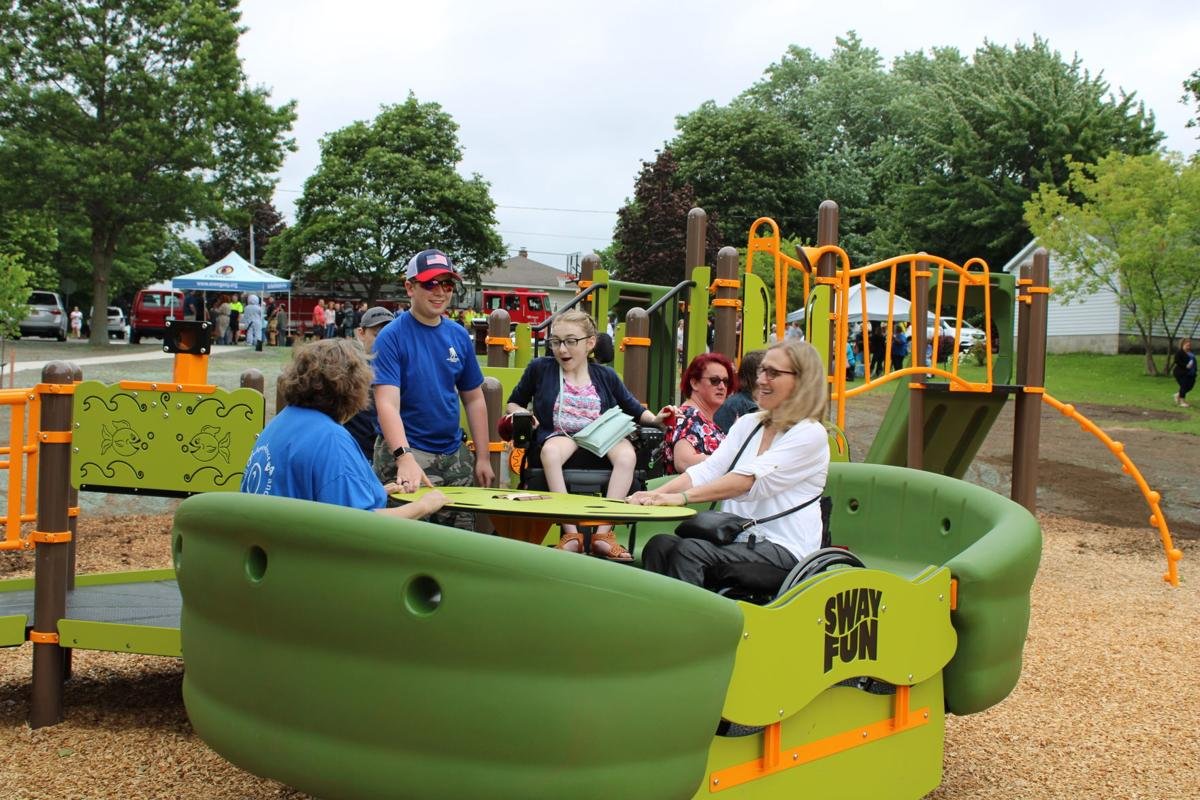
Play Map: Designing Inclusive Spaces
Students will map out where they have recess. Students will be asked to reflect on the physical accessibility of their environment (i.e. 3 steps to go from classroom to outside, playground has woodchips and a step up). They will draw out a map for their current environment and then create new map that is a inclusive play area.
Image description: wheelchair accessible playground equipment and people playing on it

Portrait of the Whole Person - Disability Rights Washington
Portrait of the Whole Person is a curriculum for elementary school students designed to teach students how disability rights fit into the broader civil rights movement, to perceive disability as a reflection of societal views of differences, and to treat people with disabilities with respect and dignity. It contains four distinct lesson plans comprised of three in-class instruction lesson plans and one lesson plan governing the research and writing of a biographical sketch and creation of a portrait of a notable person with a disability. It is also complete with a graphic organizer, rubrics, a power point, and a list of references students can use for research.
Image Description: Disability Rights Washington logo with “Portrait of a Whole Person Curriculum Overview” written below and drawings of 3 different people in colored pencil.
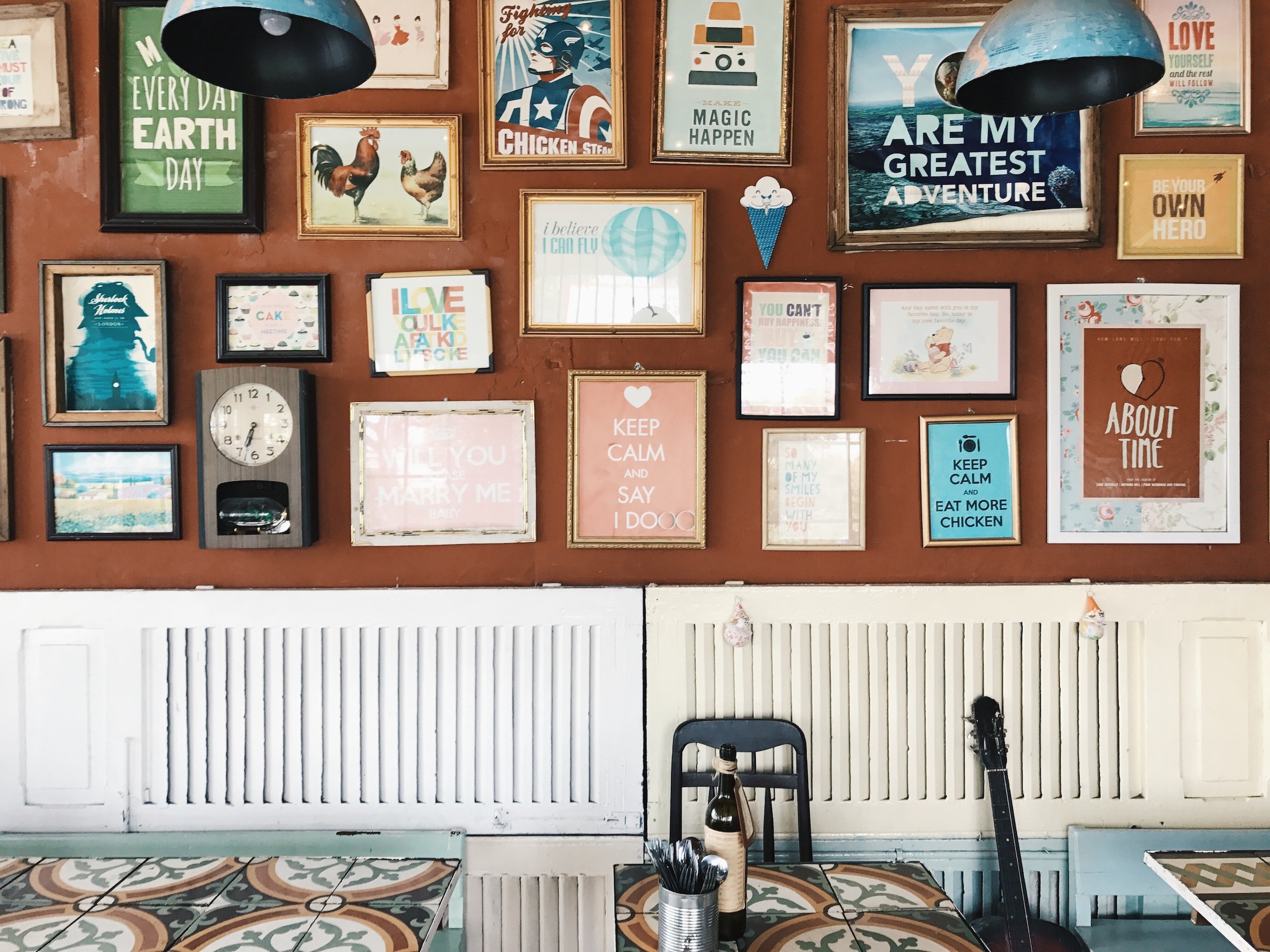
Posters with Disability Inclusive Content
Posters with disability representation. Most are free to download, though some can be purchased as well.
Image description: Corkboard wall with many signs of assorted size and colors.
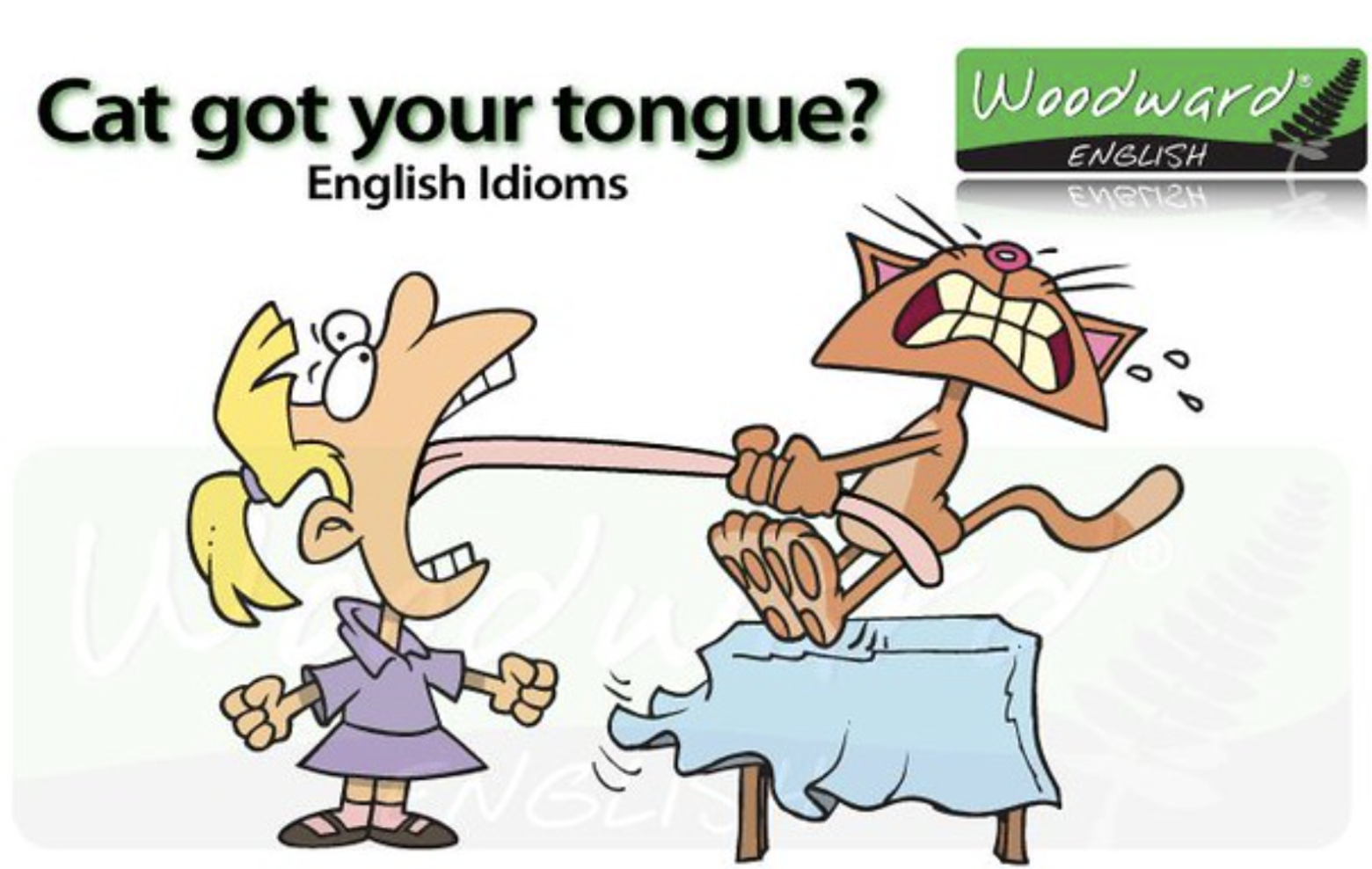
Recognizing Literal and Figurative Language, Idoms & Metaphors
In this 3 part lesson, students will learn how to recognize idioms and explain the difference between literal and figurative language
Students will determine what assumptions are made in certain situations and text using literal and figurative language.
Image description: Graphic showing a cat pulling on a child’s tongue with the text “Cat got your tongue? English Idioms”

The Sneetches Lesson
Students will read/watch the story of The Sneetches by Dr. Seuss. Students will think about prejudice and bullying. Students will learn that differences are not a bad thing and that no one should have to change to please others.
Image description: Cover art from the book “The Sneetches”
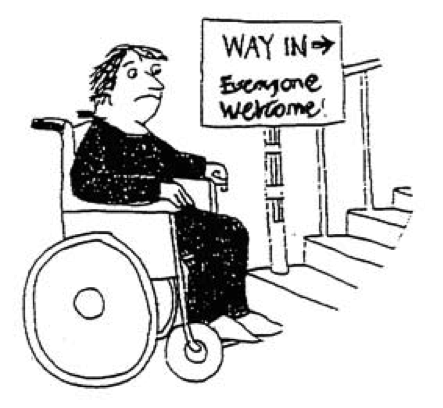
The Social Model of Disability
This links to our Social Model of Disability resources page which contains videos and examples of how to introduce and teach the Social Model of Disability.
Image description: Illustration of a person seated in a wheelchair at the bottom of a set of stairs. There is a sign at the bottom of the stairs pointing to the stairs that says “WAY IN Everyone Welcome!”

Thukpa for All - Reading Guide and Lesson Plan that Addresses the Social Model of Disability
Students or teachers read Thukpa for All by Praba Ram and Sheela Preuitt and consider how the story relates to the social model of disability.
Image Description: Cover of Thukpa for All is light yellow/orange divided in 7 panels. 3 on left and 3 on right have characters from the book. The top center panel has the title of the book and a bowl of noodle soup with steam rising from it. The bottom center panel has the names of the authors and illustrator.

We Want to Go to School
Using the book "We Want to Go to School," students will learn about the segregation of students with disabilities in the school setting. They will learn about the barriers that prevented students from attending school and the progression and processes to challenge and remove those barriers.
Image Description: Cover of We Want to Go to School! The Fight for Disability Rights by Maryann Cocoa-Leffler & Janine Leffler. The cover artwork shows five children behind a table that has papers and a gavel on it.

We Will Ride Lesson by Pop Culture Classroom
In this lesson students will read a 2-page graphic novel format story about the Gang of 19 and “We Will Ride” action, and how they fought for equal rights for the disabled.
Image Description: Graphic Novel cover showing protesters in purple black and off white on a green background with the title “Colorful History Comics #31 We Will Ride” underneath the comic.
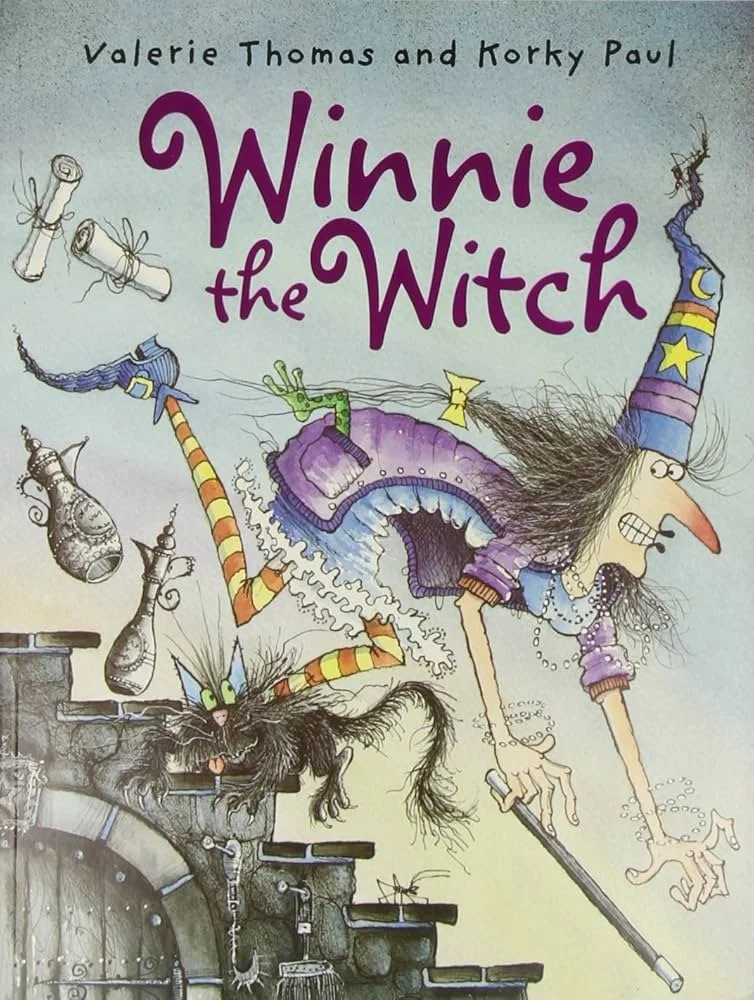
Winnie the Witch - Reading Guide and Lesson Plan that Addresses the Social Model of Disability
Students or teachers read or watch “Winnie the Witch” by Valerie Thomas and Korky Paul and consider how the story relates to the social model of disability. Students can apply what they learned about the social model, make connections, and identify events in the story where it was used.
Image Description: cover of the book "Winnie the Witch" which showed Winnie the Witch tripping over a black cat on the stairs.
The Wonderful Wizard of Oz: Disability Informed Reading Guide
The Wonderful Wizard of Oz: Disability Informed Reading Guide
Image Description: “The Wonderful Wizard of Oz: Disability Informed Reading Guide” pale yellow background with black text. Simple black book with white pages graphic.