
The New York Times - ‘The Hidden Image Descriptions Making the Internet Accessible’
In this lesson, students will learn about alt text, and image descriptions that help people who have low vision or are blind to use the internet. Then, they will practice using the feature.
Image Description: "The Learning Network Teaching & Learning with the New York Times" Below the text is the Mona Lisa with 3 examples of alt text descriptions from Microsoft Word, Facebook and Wikipedia.

New York Times: Learning With: ‘Adaptive Video Game Controllers Open Worlds for Gamers With Disabilities’
This lesson explores how adaptive video game controllers are transforming gaming for players with disabilities. Students will first reflect on their own gaming experiences before analyzing a commercial and reading an article about accessibility in gaming. Through discussion questions, they will examine the challenges faced by disabled gamers, how technology has evolved to be more inclusive, and the broader impact of adaptive controllers. The lesson encourages critical thinking about accessibility in technology and invites students to consider how they would design more inclusive gaming experiences.
Image Description: "The Learning Network Teaching & Learning with the New York Times" Below the text is a photo of Erin Hawley playing video games with her family. She uses an adaptive controller.

One Out of Five lesson series
The purpose of this lesson is to humanize the experience of disability by focusing on student-voice videos, recognize diversity within the disability community, and discuss ways to promote accessibility. This is the first in a series of 5 lessons by Washington State’s One Out of Five Disability History and Pride Project.
Image Description: Groups of students sit and stand, talking in clusters. The profiles of the students of different ages, races, and abilities is on a colorful background of yellow, orange, and green. The dominant image is the silhouette of a male student in dark blue reading a book. The title is: One Out of Five: Disability History and Pride Project. “One” and “five” are spelled out in American Sign Language. At the bottom, Braille reads: “pride” and “history.”]
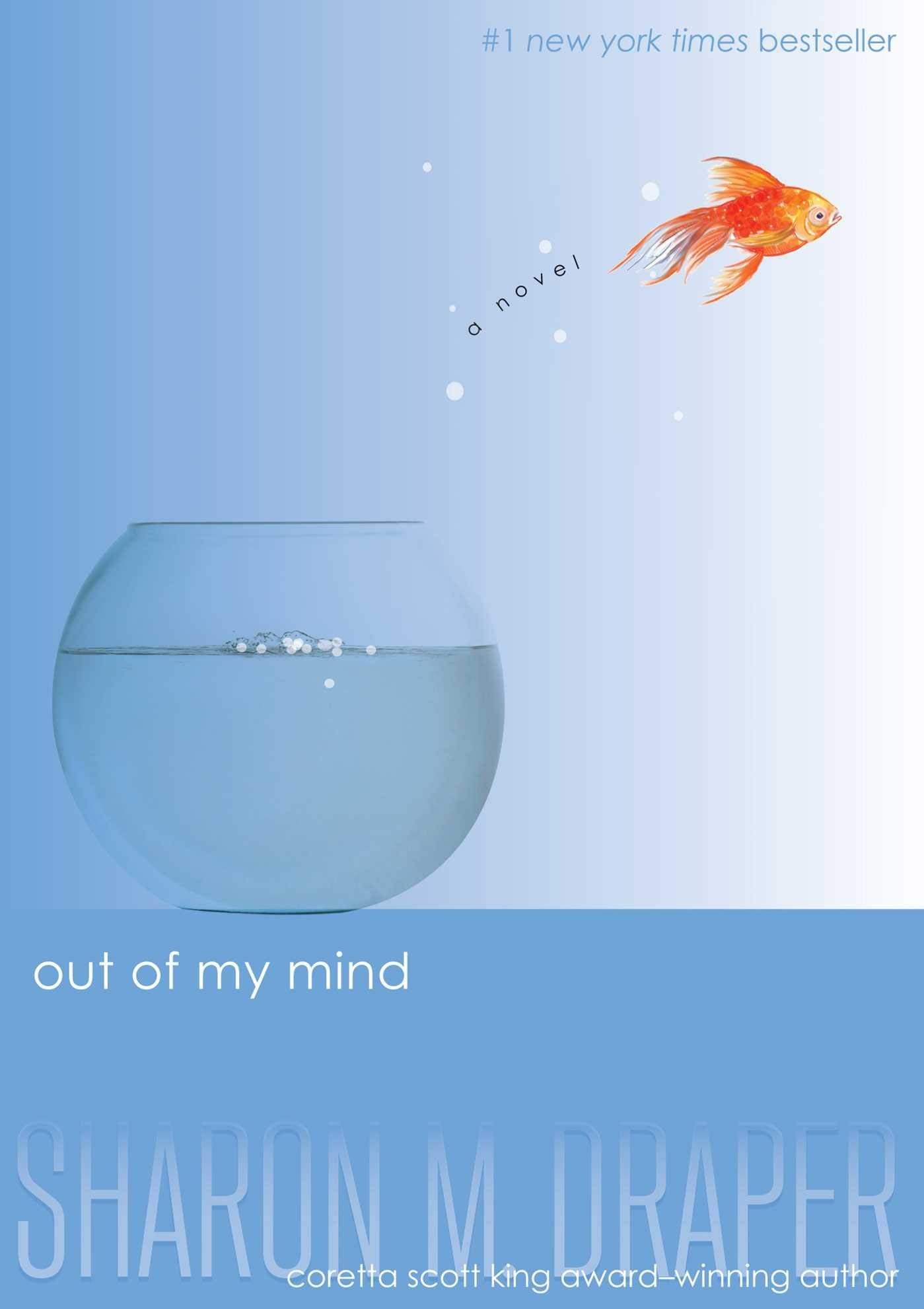
Out of my Mind - Book Discussion Guide
Out of My Mind is narrated by a girl with cerebral palsy who's very intelligent but unable to express herself by speaking or physically. When Melody is integrated into some general classes at school, many kids are purposely mean; others, including teachers, are cruel through their assumptions that Melody is incapable of understanding them. With the help of her parents and some supportive friends and teachers, Melody acquires a machine that allows her to communicate better than she ever has before (Common Sense Media). At last Melody has a voice… but not everyone around her is ready to hear it (Draper, 2010). This book discussion guide can also be adapted into a full assignment if that is more applicable for your student group.
Image description: Cover from the book “Out of My Mind”

Patient No More: People with Disabilities Securing Civil Rights
Teaching the story of the 504 occupation, the focus of the Patient No More exhibit, will undoubtedly leave students with a new perspective toward living with a disability. “Patient No More” offers a story about the creativity and strength that comes out of the disability community, an incredible example of how change can happen from the bottom up. It's also a story about how disability rights have changed the lives of all Americans in ways they might not realize.
Image Description: “Patient No More - People with disabilities securing civil rights” black and white photo of protestors with capitol building in the background, many in wheelchairs, one with a sign on the back of their wheelchair that says “We Shall Overcome”

Personify a Word with Social Media Lesson
Students will research concepts related to disability and then create a physical Pinterest board in groups. Each group will present and discuss their concept in a gallery walk style. This lesson highlights the social model of disability as well as introducing disability topics.
Image description: the word “personification” repeated over and over at an angle

Portrait of the Whole Person - Disability Rights Washington
Portrait of the Whole Person is a curriculum for elementary school students designed to teach students how disability rights fit into the broader civil rights movement, to perceive disability as a reflection of societal views of differences, and to treat people with disabilities with respect and dignity. It contains four distinct lesson plans comprised of three in-class instruction lesson plans and one lesson plan governing the research and writing of a biographical sketch and creation of a portrait of a notable person with a disability. It is also complete with a graphic organizer, rubrics, a power point, and a list of references students can use for research.
Image Description: Disability Rights Washington logo with “Portrait of a Whole Person Curriculum Overview” written below and drawings of 3 different people in colored pencil.
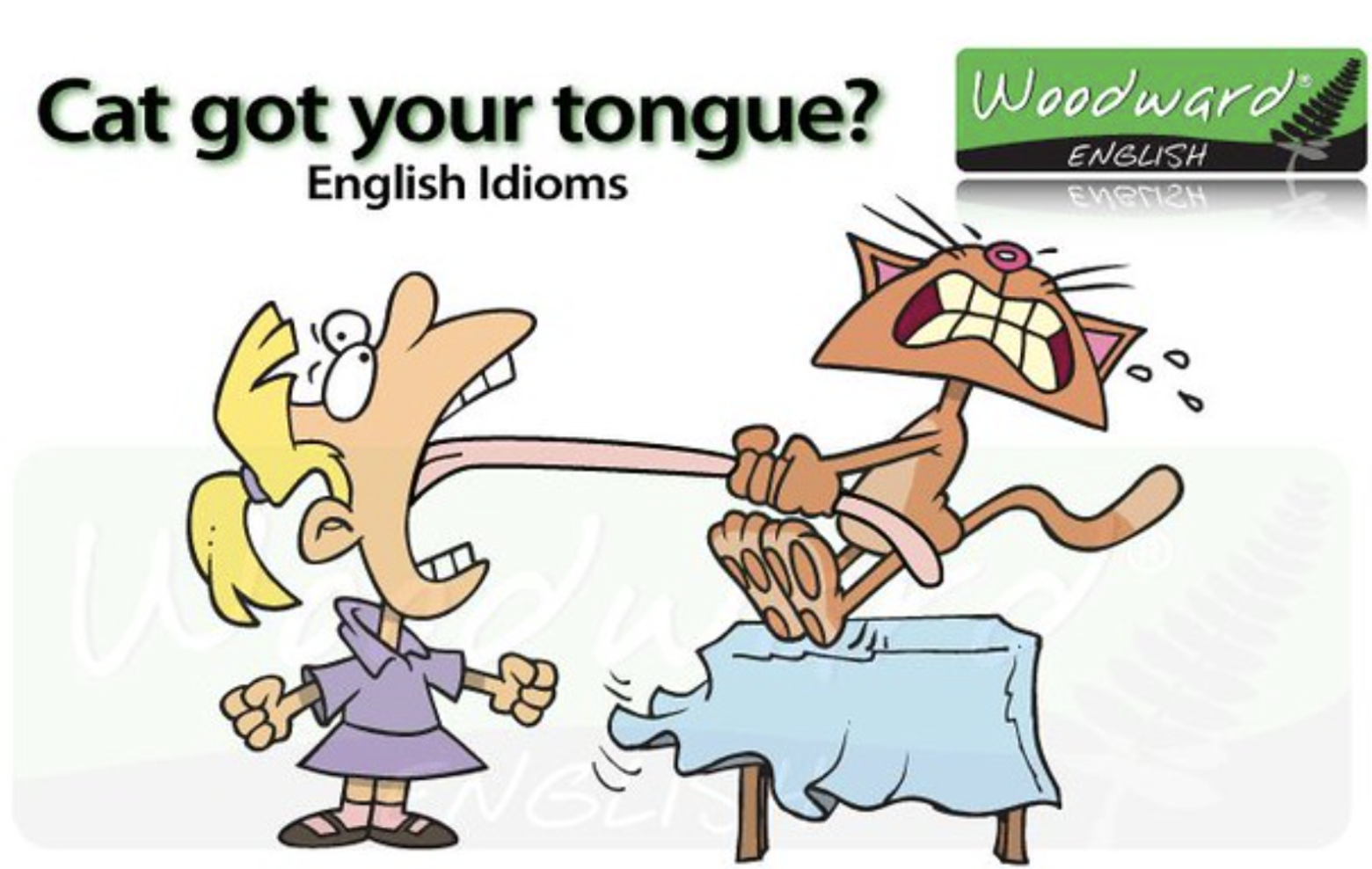
Recognizing Literal and Figurative Language, Idoms & Metaphors
In this 3 part lesson, students will learn how to recognize idioms and explain the difference between literal and figurative language
Students will determine what assumptions are made in certain situations and text using literal and figurative language.
Image description: Graphic showing a cat pulling on a child’s tongue with the text “Cat got your tongue? English Idioms”

Simple Things Count: How can I help?
This two-session lesson engages students in exploring ways to be more inclusive of people with disabilities. Through a series of short, accessible disability voice videos, students will recognize diversity within the disability community and learn practical steps to foster inclusion. Using discussion, reflection, and interactive activities, students will examine their own discomfort, identify attitudinal barriers, and explore how small actions can create more accessible and welcoming environments.
This lesson provides a foundation for students to understand the impact of their actions and equips them with strategies to promote disability inclusion in everyday life.
Image Description: Screenshot of video titled “Simple Things Count” text also includes “Emily Ladau - Disability Rights Activist” with an illustration of Emily seated in her wheelchair

The Sneetches Lesson
Students will read/watch the story of The Sneetches by Dr. Seuss. Students will think about prejudice and bullying. Students will learn that differences are not a bad thing and that no one should have to change to please others.
Image description: Cover art from the book “The Sneetches”

Tell YOUR Story
This lesson will teach students how to give an oral presentation of a memory in their lives.
Image Description: Black text on blue and white faded background “Tell YOUR Story” pile of books with the top book fanned out

Thinking Critically about Disability - Social Media Lesson
When Stephen Hawking passed away, many artists processed the loss through art. Their art depicts disability from multiple perspectives. In this activity students will explore 2 contrasting images. Take note of the details and how the images depict Stephen Hawking and his physical disability. Both of the images are from Twitter and students may have already seen both of the images just scrolling through their phones. Students will explore elements of art, social studies and psychology in this lesson. The focus of the discussion is up to individual educators.
Image description: illustration of Stephen Hawking, seated in his motorized wheelchair, floating above the earth with other planets in the background

Thukpa for All - Reading Guide and Lesson Plan that Addresses the Social Model of Disability
Students or teachers read Thukpa for All by Praba Ram and Sheela Preuitt and consider how the story relates to the social model of disability.
Image Description: Cover of Thukpa for All is light yellow/orange divided in 7 panels. 3 on left and 3 on right have characters from the book. The top center panel has the title of the book and a bowl of noodle soup with steam rising from it. The bottom center panel has the names of the authors and illustrator.
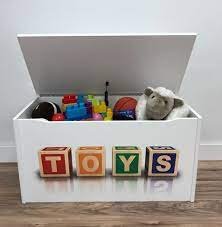
The Toy Box: Introducing Disability Lesson
In this lesson students will get to explore and examine toy and adult versions of accessibility devices. The idea is to introduce disability to students using tactile and observational learning. Students will learn that all these devices are for people with disabilities to live their lives, enjoy themselves and access the community. It is no different from the everyday tools we use throughout our lives.
Image description: a photograph or an open toy box with the word “TOYS” on the front
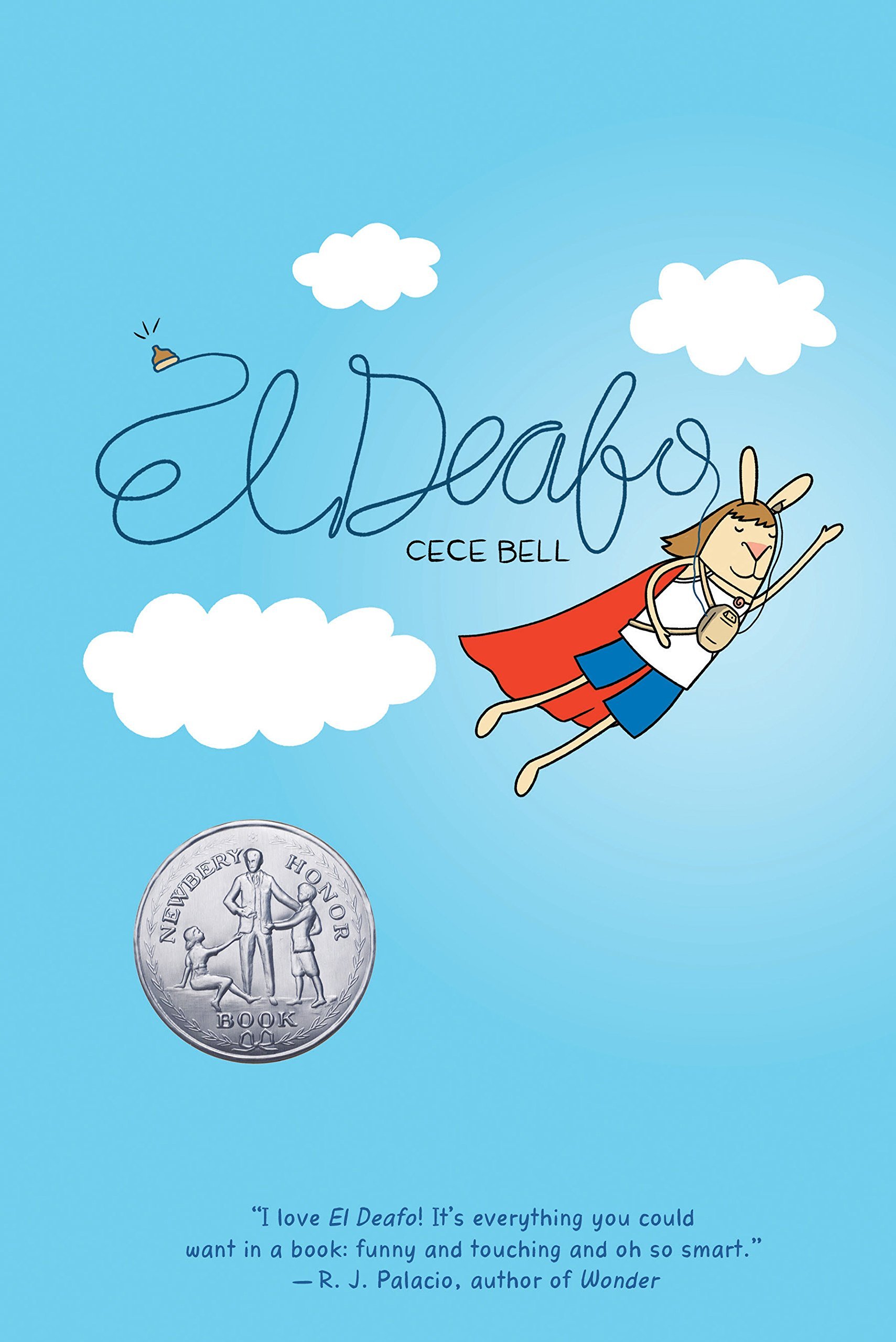
We are all Superheroes: A Theatrical Unit on “El Deafo”
This lesson is a unit of 9 classes. “El Deafo” is a graphic novel about a young girl, Cece, who becomes deaf in elementary school. The book highlights how she adjusts to her new life as she navigates her new hearing aids, communication, teachers and friendships. In each class students will read the parts of each character like they are reading for a play rehearsal. Encourage students to really embody their characters, gesturing, facial expressions and standing up (if possible). This lesson encourages students to feel empathy because each discussion highlights the feelings of characters. Each class is split up into a discussion and a reading.
Image description: Cover art for the book “El Deafo”

We Want to Go to School
Using the book "We Want to Go to School," students will learn about the segregation of students with disabilities in the school setting. They will learn about the barriers that prevented students from attending school and the progression and processes to challenge and remove those barriers.
Image Description: Cover of We Want to Go to School! The Fight for Disability Rights by Maryann Cocoa-Leffler & Janine Leffler. The cover artwork shows five children behind a table that has papers and a gavel on it.

We Will Ride Lesson by Pop Culture Classroom
In this lesson students will read a 2-page graphic novel format story about the Gang of 19 and “We Will Ride” action, and how they fought for equal rights for the disabled.
Image Description: Graphic Novel cover showing protesters in purple black and off white on a green background with the title “Colorful History Comics #31 We Will Ride” underneath the comic.
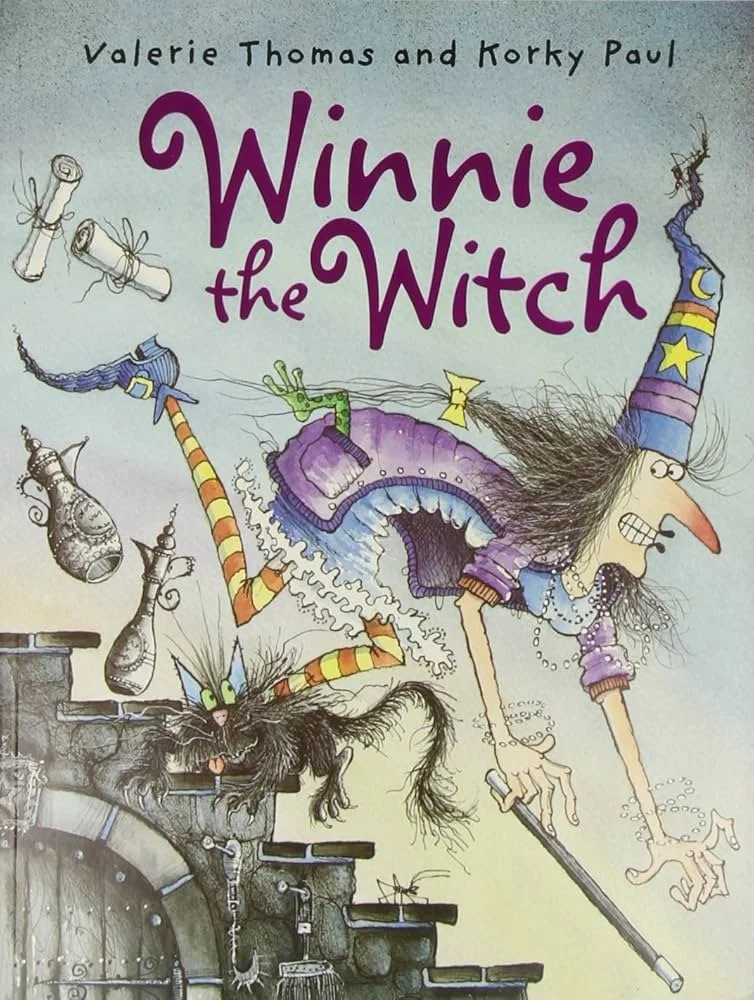
Winnie the Witch - Reading Guide and Lesson Plan that Addresses the Social Model of Disability
Students or teachers read or watch “Winnie the Witch” by Valerie Thomas and Korky Paul and consider how the story relates to the social model of disability. Students can apply what they learned about the social model, make connections, and identify events in the story where it was used.
Image Description: cover of the book "Winnie the Witch" which showed Winnie the Witch tripping over a black cat on the stairs.