
A Christmas Carol: Disability Informed Reading Guide
A Christmas Carol: Disability Informed Reading Guide
Image Description: “A Christmas Carol: Disability Informed Reading Guide” pale green background with black text. Simple black book with white pages graphic.

The Americans with Disabilities Act: Taking Action for Access Lesson by National History Day
By analyzing various primary and secondary sources, students will determine how citizen activism among the disabled community led to passage of the Americans with Disabilities Act (ADA) in 1990. After reviewing ADA provisions that improved access to public facilities and the workplace, students will identify continued areas of need for people with disabilities and develop public service announcements that promote personal responsibility for maintaining accessibility.
Image Description: National History Day logo, “The Americans with Disabilities Act: Taking Action for Access,” and a series of 4 blue and white accessibility symbols arranged in a diamond pattern with “Americans with Disabilities Act” along the top edges.

Beauty and the Beast: Disability Informed Reading Guide
Beauty and the Beast: Disability Informed Reading Guide
Image Description: “Beauty and the Beast: Disability Informed Reading Guide” pale blue background with black text. Simple black book with white pages graphic.

Black Disabled Art History Lesson
Students will select a Black Disabled artist from Leroy Moore’s Black Disabled Art History 101. Students will research their selected artist and their works. Students will choose a piece of artwork created by this artist and analyze it using a critical artistic framework. This lesson can be adapted for a wide range of ages.
Image description: Cover photo of Black Disabled Art History 101
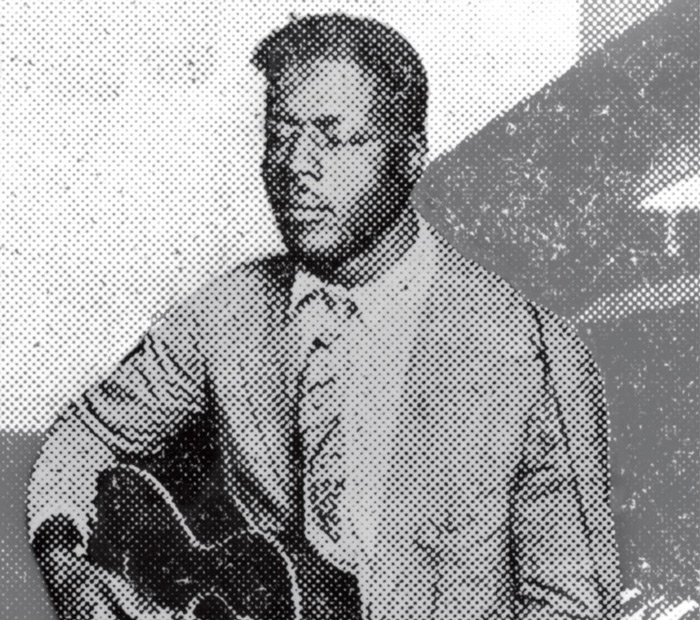
Blind Willie Johnson Lesson
Students will learn about one of the most influential blues guitarists of the early 1900s, Blind Willie Johnson. They will read an article detailing his life and how he is remembered. The class will then listen to an example of his music, and covers of his music. Students will also discuss how blind musicians can help advance the discussion concerning the stigma of disability.
Image description: halftone photograph of Blind Willie Johnson

Calendar of Events
A calendar of events that recognizes various days (and months) is an easy way to bring the conversation about disability into your classrooms and schools. Including discussion of disabled people throughout the year sends a message to all that disabled students are recognized and valued as a part of the education community.
Image description: calendar page tilted at an angle, reading glasses rest on the bottom corner of the calendar
The Catcher in the Rye: Disability Informed Reading Guide
The Catcher in the Rye: Disability Informed Reading Guide
Image Description: “The Catcher in the Rye: Disability Informed Reading Guide” pale blue background with black text. Simple black book with white pages graphic.

Circle of Friends Lesson
Students will participate in an exercise and discussion on disability and segregation. In this lesson students will map out social interactions in their everyday lives. After they complete the exercise the teacher will facilitate a discussion on segregation. Students with disabilities who grow up in institutions are effectively segregated from the rest of the population, so their social circles tend to look very different from the students in class. This lesson is split into two class periods.
Image description: Overlapping circles with various disability icons inside each circle
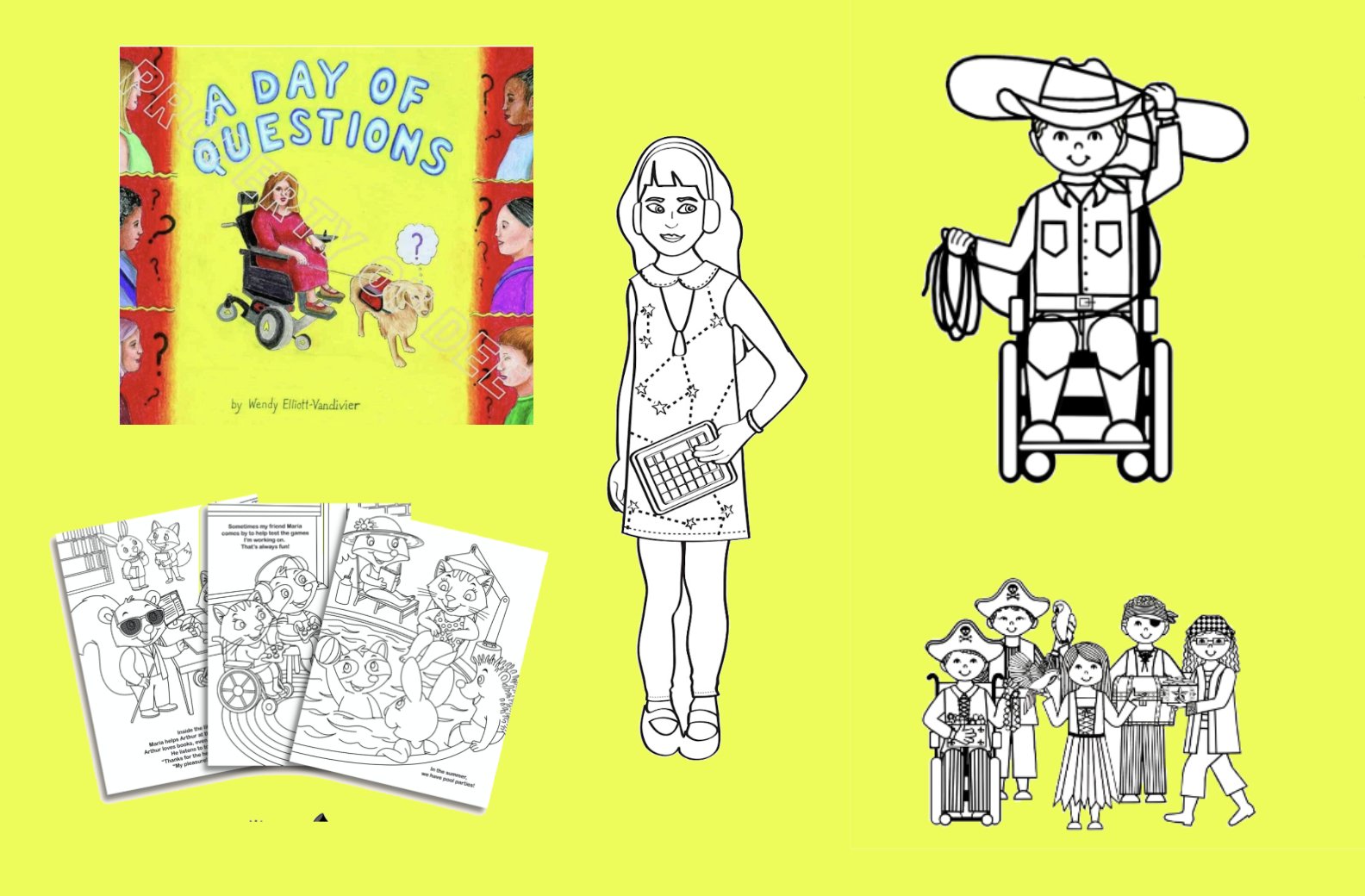
Coloring Books, Pages and Clip Art with Disability Representation
Including coloring pages and artwork in lessons (some of these allow you to use as clip art) that includes disability representation furthers the goal of regularizing disability by seeing it and offering opportunities to learn and ask questions.
Image Description: small images of the coloring books on a yellow background
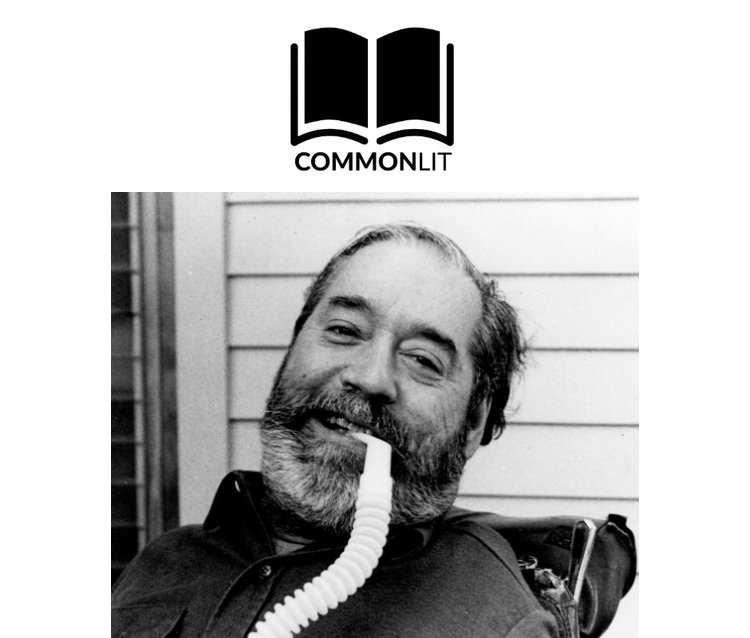
CommonLit - On Disability Rights: Highlights from Speeches by Ed Roberts
Students read a compilation of speeches by Ed Roberts, a disability rights activist and organizer, and examine how he uses personal narrative, humor, and argument to make the case for disabled people's autonomy, access, and civil rights. Through reading and discussion, students analyze Roberts' rhetorical choices and consider how individuals and communities build power to challenge systemic barriers.
Image Description: Logo of CommonLit, which looks like an open book with a photo of Ed Roberts with his breathing tube in his mouth

Deaf President Now Unit
This unit focuses on the historical event that caused a ripple in the Deaf community, Deaf President Now. The unit includes three lessons, three projects, and a lot of fun!
Image Description: Black and white photo of students holding a banner that says “Deaf Prez Now!”.

The Day the World Heard ... Kent State and Gallaudet University
Students will be introduced to two important events in US history – the Kent State Massacre and Deaf President Now protest. They will be exposed to the events that occurred on the two college campuses and their outcomes. They will read the First Amendment and be presented with information to assist them in drawing conclusions about whether these were peaceful protests. They will obtain information to assist them in comparing and contrasting the two events. As the culminating activity, students will create a storyboard about May 4, 1970 at Kent State.
* NOTE: This lesson could be taught during Deaf Awareness week and the following week ‐‐ could encompass ASL, history and ELA classes.
Image Description: Colorful painting depicting a protest scene in front of a domed building. In the foreground, several figures are holding a large sign that reads "DEAF PRESIDENT NOW" in red letters. There are also several flags in vibrant colors, including red, blue, and yellow, being waved by the crowd.
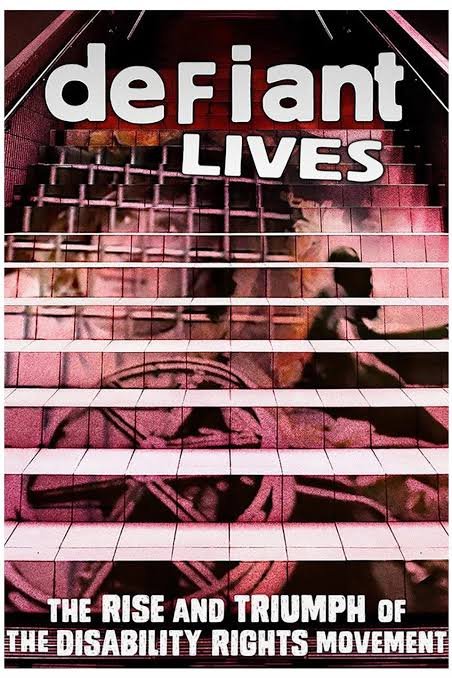
Defiant Lives Disability Rights Lesson
Students will watch “Defiant Lives: The Rise and Triumph of the Disability Rights Movement in the United States, England, and Australia.” It covers important milestones in disability activism, from breaking people out of nursing homes to advocating for equal rights. The discussion topics in the film vary from institutionalization to passing legislation. The film highlights in particular, the vast differences between the medical model of disability and the social model of disability. For 5 days, students will watch a segment of the film and record their own thoughts and then discuss their thoughts with a partner and the full group. The last two days students will work together to create their own plan to address an issue in their own community.
Image description: Defiant Lives poster showing stairs and projected onto the stairs is a pink and black wheelchair and disability activist. Text at the top says Defiant Lives and text at the bottom says the Rise and Triumph of the Disability Rights Movement

Demystifying Pennhurst State School Lesson
In this lesson students will compare and contrast 3 videos on Pennhurst State School. Students will delve into two narratives, The “horror” and “historical”. In a class discussion, students will discuss the implications of each narrative on how society views mental illness and intellectual disability. Students will learn about Pennhurst and the historic self-advocacy of the residents and the eventual closing of the PA institution.
Image description: Black and white photograph of Pennhurst
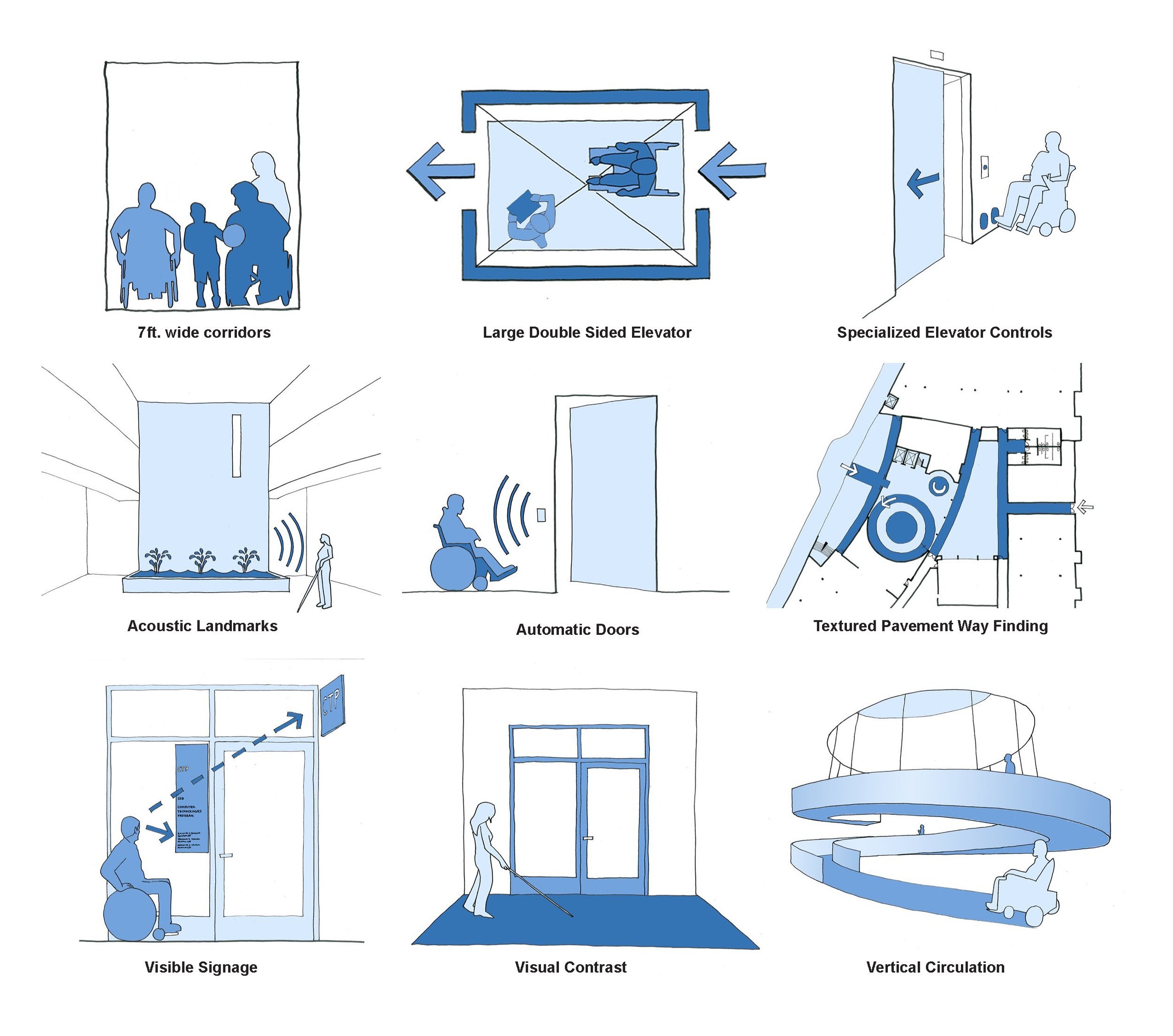
Designing with Disability in Mind
This lesson plan combines geometry with social awareness by exploring some of the principles of universal design and accessibility.
Over two class periods, students review key geometric concepts such as area, perimeter, and volume, and apply these concepts to redesign public spaces to meet accessibility standards. Through video content, class discussions, and hands-on design activities, students learn the importance of creating inclusive environments for people with disabilities. To share their work and demonstrate their learning, students will engage in a “gallery walk” to debut their group presentations of redesigned floor plans.
Image Description: Graphic showing 9 features of accessible design used at the Ed Roberts Campus

Disability Data Art
In this lesson, students will learn about data art, an art form that takes scientific or mathematical data and translates it into a visual art form such as a painting, drawing or sculpture. Using disability related statistical data from provided sources, they will create their own piece of data art. The students will also write short reflections on the artwork that they create. This lesson can function both as a standalone art exercise, or may be a useful closing exercise for a unit in math or science that focuses on statistics.
Image Description: Text at top of image in white says “Disability Data Art”. Image with a water like teal and pale yellow background and assorted shapes in various colors from the previous chart overlaid on the background.
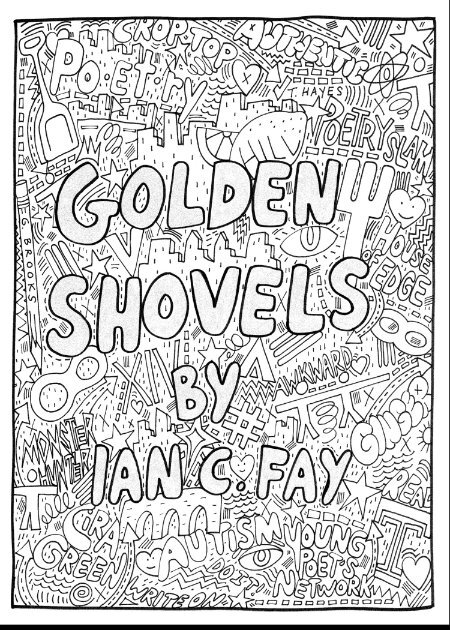
Disability and Disability Arts Invisible Disabilities/Autism/Poetry/Golden Shovels Poetic Form
Lesson title: Disability and Disability Arts - Disability and Disability Arts Invisible Disabilities/ Autism/Poetry/ Golden Shovels Poetic Form
This is a three part lesson to introduce the student to disability and a disabled artist's work. Disability arts is an art form where the context of the art takes on disability as its theme. Disability art is about exploring the various realities of what it's like to be disabled. The theme of disability may be used in a variety of ways in how the artist chooses to represent the theme in their work. This lesson uses poetry created by Ian Fay.
Image Description: black and white illustration with the title “Golden Shovels by Ian C. Fay” in bold open letters. The background is filled with dense, intricate doodle pattern.

Disability and Disability Arts - Invisible Disabilities - “See Me; Invisibility” Paintings Lessons
Disability and Disability Arts - Invisible Disabilities - “See Me; Invisibility” Paintings Lessons
This is a three part lesson to introduce the student to disability and a disabled artist's work. Disability arts is an art form where the context of the art takes on disability as its theme. Disability art is about exploring the various realities of what it's like to be disabled. The theme of disability may be used in a variety of ways in how the artist chooses to represent the theme in their work. This lesson uses 3 paintings created by Mali Fenning.
Image Description: 3 paintings by Mali Fenning. Left artwork features geometric shapes and a dark color palette. Top right art features a colorful face with red lips and curly hair. The bottom right artwork has wavy lines and circular shapes in a mix of colors.

Disability History through Primary Sources
As our friends from Engaging America state, “Primary sources … can provide entry points and deepen exploration into historical events. Primary sources add immediacy, such as the faces in a photograph, the emotional tone of a drawing or song, or the complex look of a handwritten document. Documents from multiple points of view can illuminate conflicting ideas and events. Varied media, including maps, oral histories, published reports, and graphs offer many options for connection and investigation”.
We share these collections or primary sources as tools to continue introducing disability into the conversation from natural perspectives, using disabled people to tell their own stories whenever possible.
Image Description: Article from Dallas Times Herald, Wednesday, January 14, 1986 in section “Community Close-Up” titled “Police on sidewalk wheelchair ramps changed”
Full image description can be found at: https://adaptmuseum.net/gallery/picture.php?/451/category/16

Disability History Timeline Lesson
This lesson is meant to accompany Disability Equality in Education’s Disability History Timeline. Printable images are included in the materials to use with this lesson. In this lesson, students will select a moment from disability history and analyze its importance.
Image description: tiles from DEE”s Disability History Timeline on the wall